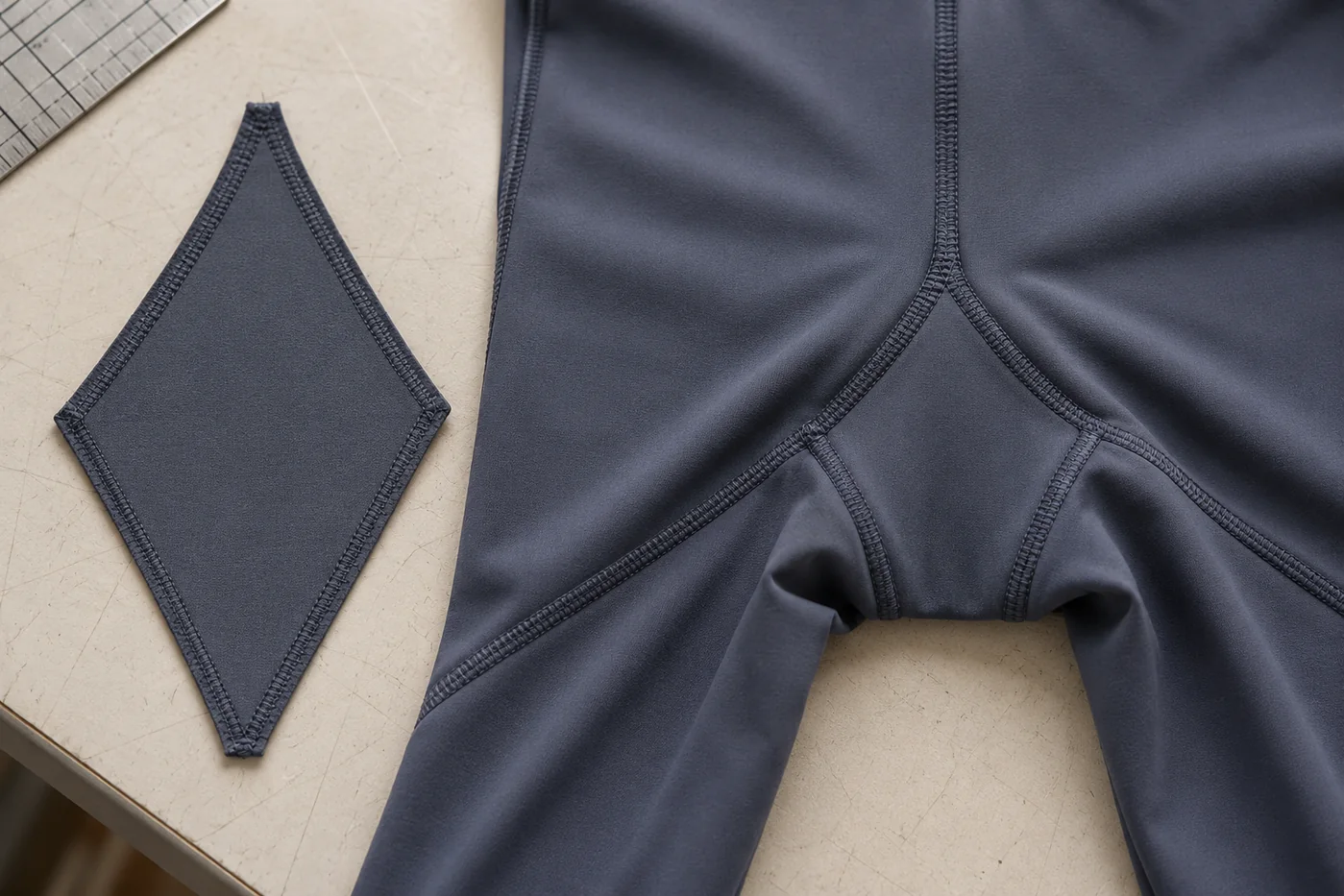
Understand What the Gusset Must Solve
A gusset can distribute strain, add movement room and relocate intersecting seams, but it cannot correct every rise or fit problem. Start with the intended activity, crotch depth, body coverage and fabric stretch.
Review front and back rise balance before adding size to the gusset. Excess fabric can create folds while insufficient length can pull the waistband down.
Choose the Shape and Orientation
Diamond, triangular and extended gussets create different seam paths and movement zones. Pattern shape should follow the body's motion and the garment's panel architecture.
Mark fabric direction on the pattern. The gusset can feel different if stretch orientation or grain is inconsistent with the legs.
Control Seam Intersection
A heavy stack of seam allowances at the crotch can create pressure and visible bulk. Select stitch type, seam allowance and operation order to keep the intersection secure and smooth.
Flatlock can reduce bulk in some products, while overlock and cover solutions may suit others. The seam must extend with the fabric without opening or breaking.
Fit Through Real Movement
Test squats, lunges, seated positions and wide-leg movement on the target fit model. Observe pressure, riding, seam location, opacity and whether the gusset remains centered.
Use light colors and realistic garment extension when coverage is a concern. A loose swatch test does not represent strain at the crotch.
Grade and Inspect the Gusset
Grade the gusset with the rise and body dimensions instead of scaling it independently without a fit rationale. Verify smaller and larger sizes because seam bulk and movement can change across the range.
Bulk inspection should confirm symmetry, direction, seam security and absence of puckering. Retain an approved sample showing the intended seam placement.
Relevant Product Program
Yoga Wear Manufacturing · Low MOQ Activewear · Fabric Performance Guides
Discuss Your Fabric Requirements
Share the product category, target quantity, fabric direction, performance claim, colors, care route and destination market with CCLIYA.
Request an OEM or ODM Quote