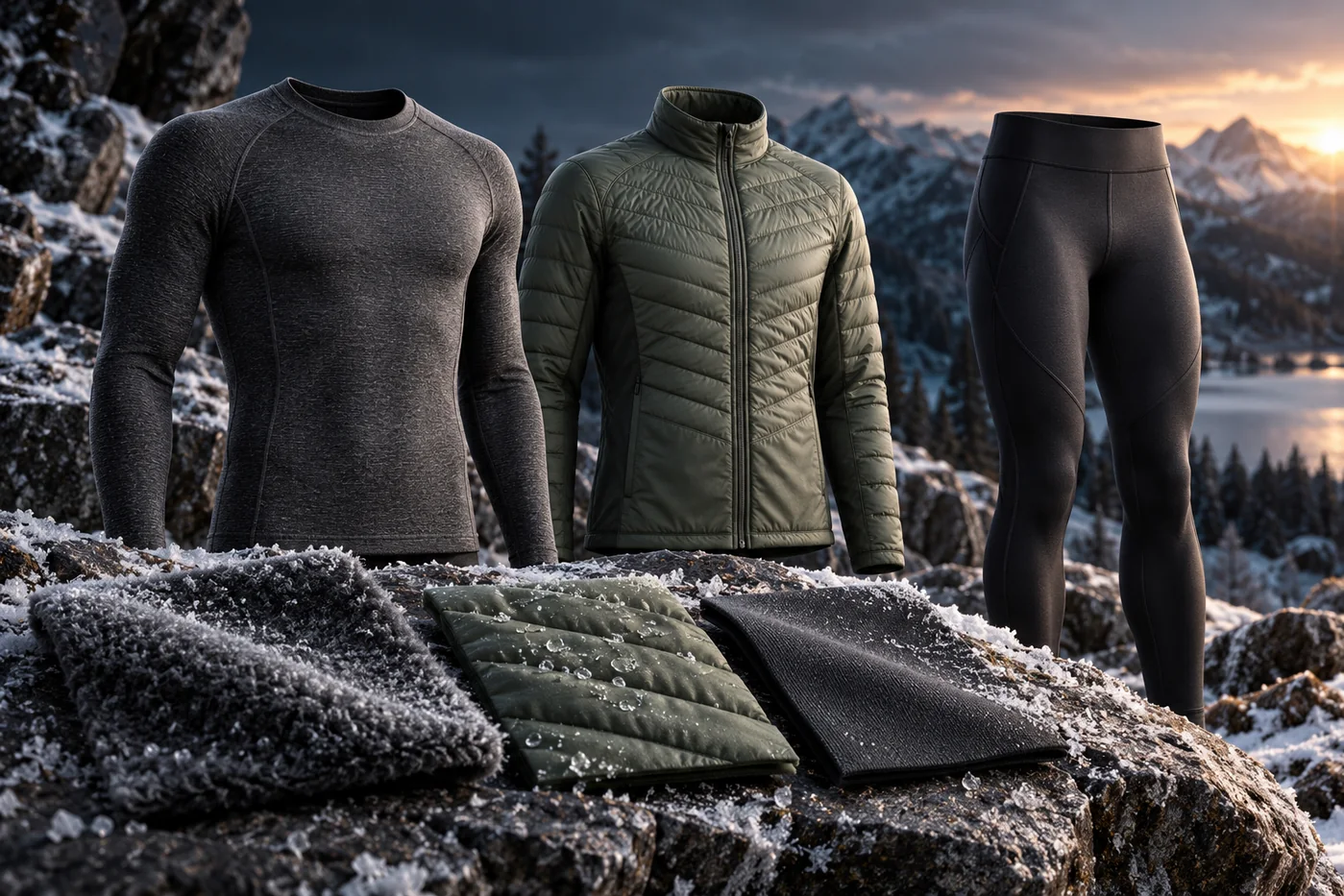
Design for an Activity and Temperature Range
Cold-weather clothing for high-output running should move moisture and limit overheating, while low-intensity outdoor use may prioritize insulation and wind protection. Define climate, activity, session length and layering position before choosing GSM.
A heavier fabric is not automatically warmer in every condition. Air retention, surface structure, wind exposure, moisture and garment fit all affect comfort.
Select the Base Fabric and Back Surface
Brushed-back knits can trap air and feel warm against the skin. Grid structures may create air channels and reduce mass. Smooth-faced constructions can layer more easily under shells.
Specify composition, weight, stretch, recovery, brushing side and surface standard. Evaluate pilling and shedding because raised fibers receive repeated friction.
Manage Sweat in Cold Conditions
Moisture retained next to the body can reduce comfort during rest periods. Review wicking, drying and ventilation alongside warmth, especially for base layers and fitted tops.
Map high-sweat zones and consider lighter panels or openings where the garment construction allows. Test the full layering system rather than one isolated swatch.
Protect Movement and Layering Ease
Thermal garments still need stretch recovery at knees, elbows and waistbands. Extra thickness can change seam bulk, pocket behavior and size perception.
Fit the base layer under the intended midlayer or jacket. Check cuff, neckline and hem overlap so movement does not expose skin or create pressure.
Verify Durability After Care
Wash and dry the garment using the proposed care route, then inspect dimensional change, surface matting, pilling, stretch recovery and insulation thickness. Check zippers, reflective transfers and bonded details with the same cycle.
For a manufacturing quote, provide climate, activity, layer position, desired warmth, fabric weight range, size plan, colors, components and order quantity.
Relevant Product Program
Men's Gym Wear Manufacturing · Low MOQ Activewear · Fabric Performance Guides
Discuss Your Fabric Requirements
Share the product category, target quantity, fabric direction, performance claim, colors, care route and destination market with CCLIYA.
Request an OEM or ODM Quote