Start With a Specific Customer, Not a Logo
A new activewear brand becomes easier to design when the founder can describe one primary customer, one activity and one buying problem. A collection for warm-climate padel players needs a different fabric, fit and price structure from a studio-to-street yoga label or a men's strength-training line.
Write a one-page positioning brief covering the customer, activity, climate, price level, competing alternatives and the reason the product deserves attention. This brief should guide product decisions before a name, packaging system or large visual campaign consumes the budget.
Turn the Positioning Into Product Rules
Convert the brand promise into three to five product rules. Examples include secure pockets, light colors with reliable opacity, modest coverage, extended sizing or fast-drying tops for humid training. Each rule should be observable in a sample or supported by a defined test.
Separate launch requirements from future ideas. A startup does not need every fabric technology or category in the first season. It needs a small number of decisions that customers can understand and the factory can reproduce.
Build a Coherent First Capsule
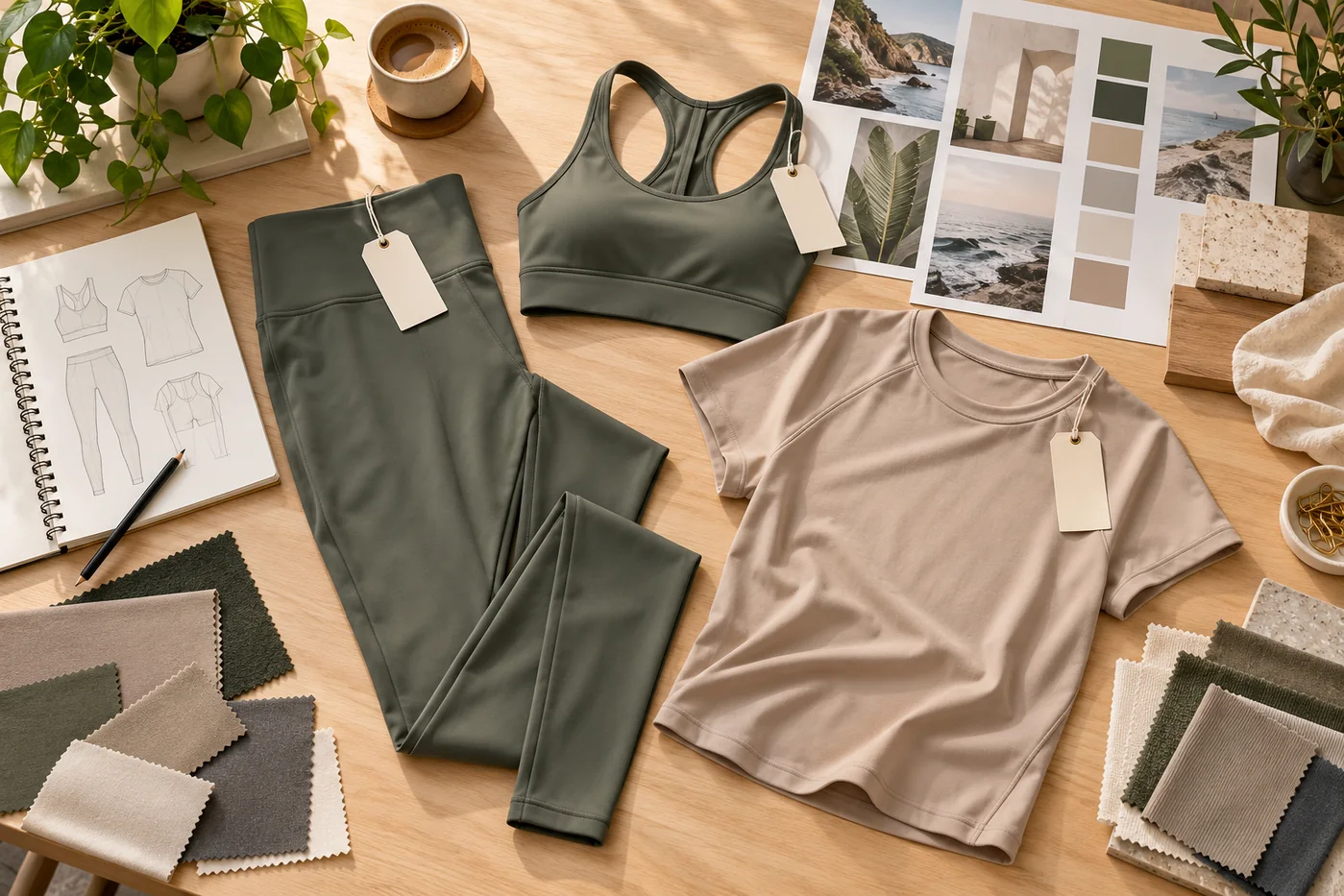
Choose a hero product that expresses the brand position, then add products that naturally complete the outfit. One legging, one bra and one top can create a stronger story than six unrelated items. Reuse compatible fabrics and trims where it improves color consistency and purchasing efficiency.
Limit colors and size combinations until demand is proven. Give every SKU a role: hero item, outfit builder, accessible entry price or repeat-purchase basic. Remove any style that does not strengthen the launch story.
Create Evidence for the Brand Promise
Decide how each promise will be approved. Fit claims require a target body and movement trial. Opacity, drying, pilling or wash durability require a repeatable method. Keep results with the fabric code, color, sample version and care condition.
Use precise customer language. It is more credible to explain the pocket dimensions, fabric weight or wash test than to call a product perfect, premium or the best without evidence.
Prepare a Manufacturer-Ready Brand Brief
Send the factory the customer profile, launch category, target retail price, desired cost range, quantity, sizes, colors, reference garments, performance priorities, logo route and target date. Identify which decisions are fixed and which are open to supplier recommendations.
This brief allows the manufacturer to propose an appropriate ready-stock, semi-custom or full-custom path. The goal is not to appear like a large company; it is to make decisions clearly enough that the first sample answers useful questions.
Relevant Product Program
Low MOQ Activewear Manufacturing · Low MOQ Activewear · Fabric Performance Guides
Discuss Your Fabric Requirements
Share the product category, target quantity, fabric direction, performance claim, colors, care route and destination market with CCLIYA.
Request an OEM or ODM Quote