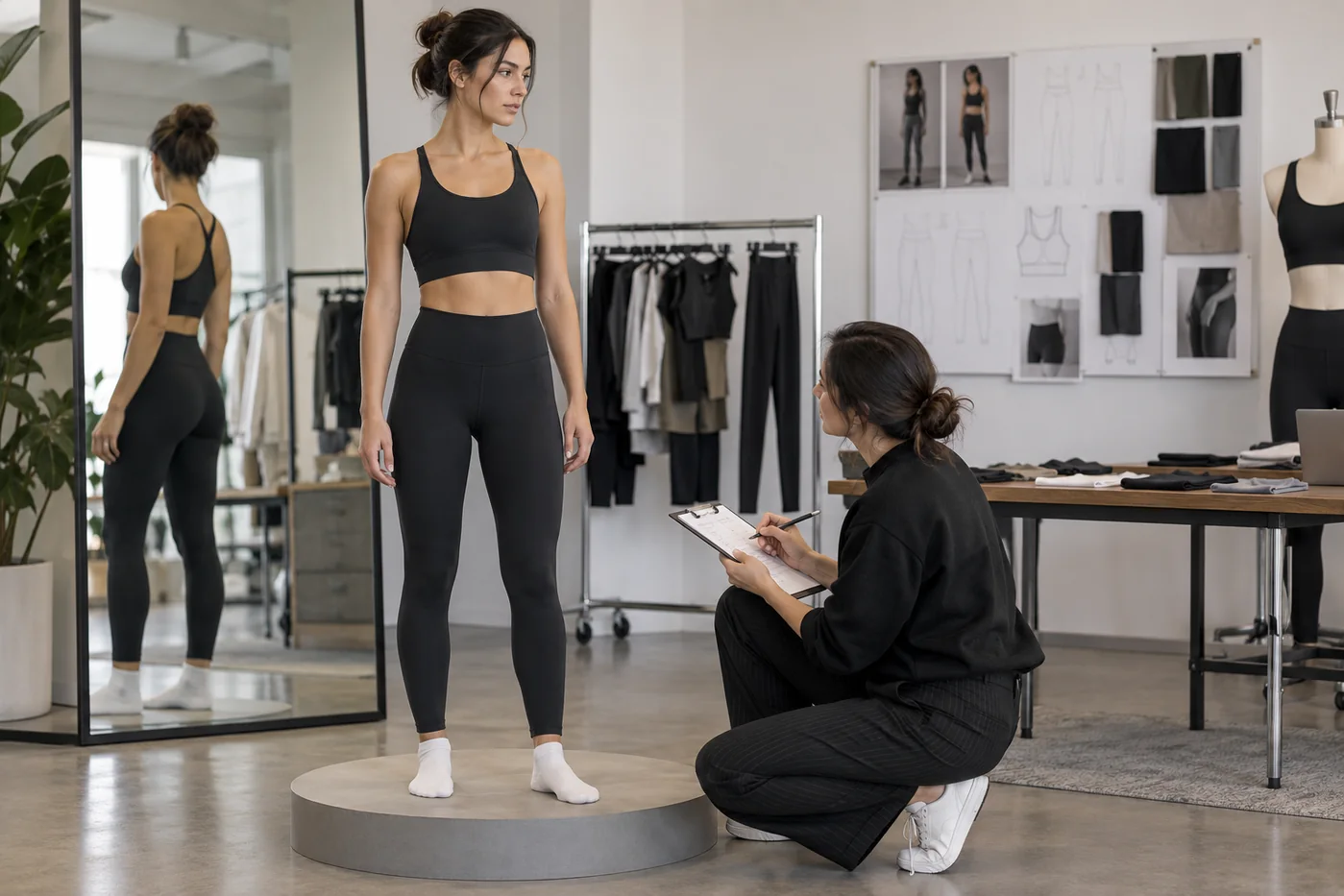
Define the Fit Session Question
A useful fitting starts with the sample stage and the decisions required. The first prototype may assess proportion, ease and construction. A later fitting may verify pocket position, waistband security or grading. Mixing unrelated decisions makes comments harder to implement.
Prepare the measurement chart, previous comments, fabric reference and intended activity before the model arrives. Mark which dimensions are fixed and which remain experimental.
Use the Right Model and Base Size
Select a fit model whose measurements represent the approved base size, not simply the person available. Record current body measurements and note meaningful differences from the target chart.
For compression or close-fitting garments, body shape and fabric force both affect the result. Evaluate the same sample on the agreed model across rounds whenever possible.
Check Static Balance Before Movement
Begin with garment alignment, waist level, side seams, crotch depth, neckline, armhole, hem and overall proportion. Measure the finished sample before interpreting visual tension, because an incorrect dimension and an incorrect pattern shape require different solutions.
Photograph front, side and back views under consistent lighting. Use close-ups only for specific defects and keep the whole-garment view for context.
Add Activity-Specific Movement
Use a short repeatable sequence such as squat, lunge, overhead reach, run step or tennis serve. Observe riding, rolling, gaping, restriction, seam pressure, pocket movement and coverage. Load pockets when the product is designed to carry a phone or ball.
Ask the model about pressure and movement, but convert subjective feedback into locations and actions the pattern team can evaluate.
Issue One Prioritized Comment Sheet
Separate critical corrections from preferences. List each issue with location, current condition, requested change, measurement or photo reference and expected outcome. Resolve conflicting comments before sending the file.
Keep the original sample and compare it with the next version. A controlled fitting history reduces circular revisions and helps determine when the garment is ready for size-set approval.
Relevant Product Program
Custom Activewear Manufacturing · Low MOQ Activewear · Fabric Performance Guides
Discuss Your Fabric Requirements
Share the product category, target quantity, fabric direction, performance claim, colors, care route and destination market with CCLIYA.
Request an OEM or ODM Quote