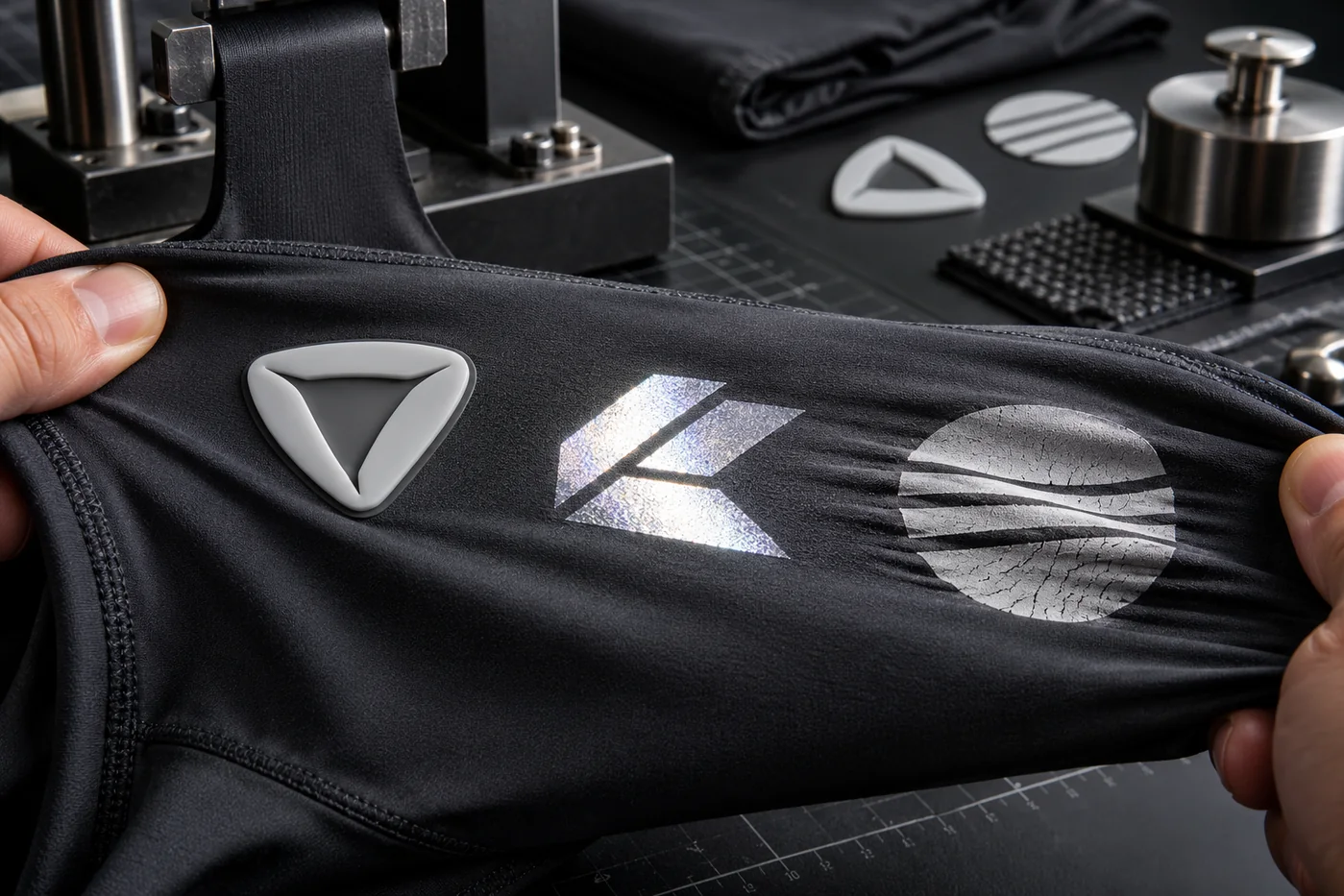
Match the Transfer to the Fabric
Silicone, polyurethane, reflective and other transfer systems behave differently on nylon, polyester, elastane blends and finished surfaces. A successful application on one fabric does not prove compatibility with another.
Test the actual production color and finish. Water-repellent chemistry, softeners, brushing and high elastane content can influence adhesion or surface marking.
Prepare Artwork for Stretch
Thin lines, sharp corners and large solid areas respond differently when the garment extends. Define minimum line width, spacing, logo size and placement with the transfer supplier before producing bulk sheets.
Place the logo where garment strain is understood. A mark crossing a seam, rib, pocket edge or high-stretch zone may crack or distort even when a flat swatch looks correct.
Control Press Parameters
Temperature, time, pressure, peel condition and protective layers must suit both transfer and fabric. Excess heat can glaze fabric, change shade or weaken elastane, while insufficient energy can cause poor bonding.
Record approved machine settings and use a first-piece check at production start. Visual approval should include edge definition, color, position and absence of press marks.
Check Dye Migration and Stretch
Sublimated or deeply dyed polyester can transfer color into a light logo under heat. Use the actual dyed fabric and allow enough observation time before approving migration resistance.
Stretch the decorated panel to the garment's expected extension and inspect recovery, cracking, lifting and puckering. Repeat after conditioning when the transfer supplier requires it.
Approve Wash Durability
Wash the decorated garment using the intended care route and inspect at agreed intervals. Check edge lift, cracking, color, reflectivity where applicable and fabric damage around the mark.
Keep the approved logo sample, artwork, transfer code, supplier batch and press parameters with the production specification so repeat orders use the same system.
Relevant Product Program
Custom Activewear Manufacturing · Low MOQ Activewear · Fabric Performance Guides
Discuss Your Fabric Requirements
Share the product category, target quantity, fabric direction, performance claim, colors, care route and destination market with CCLIYA.
Request an OEM or ODM Quote