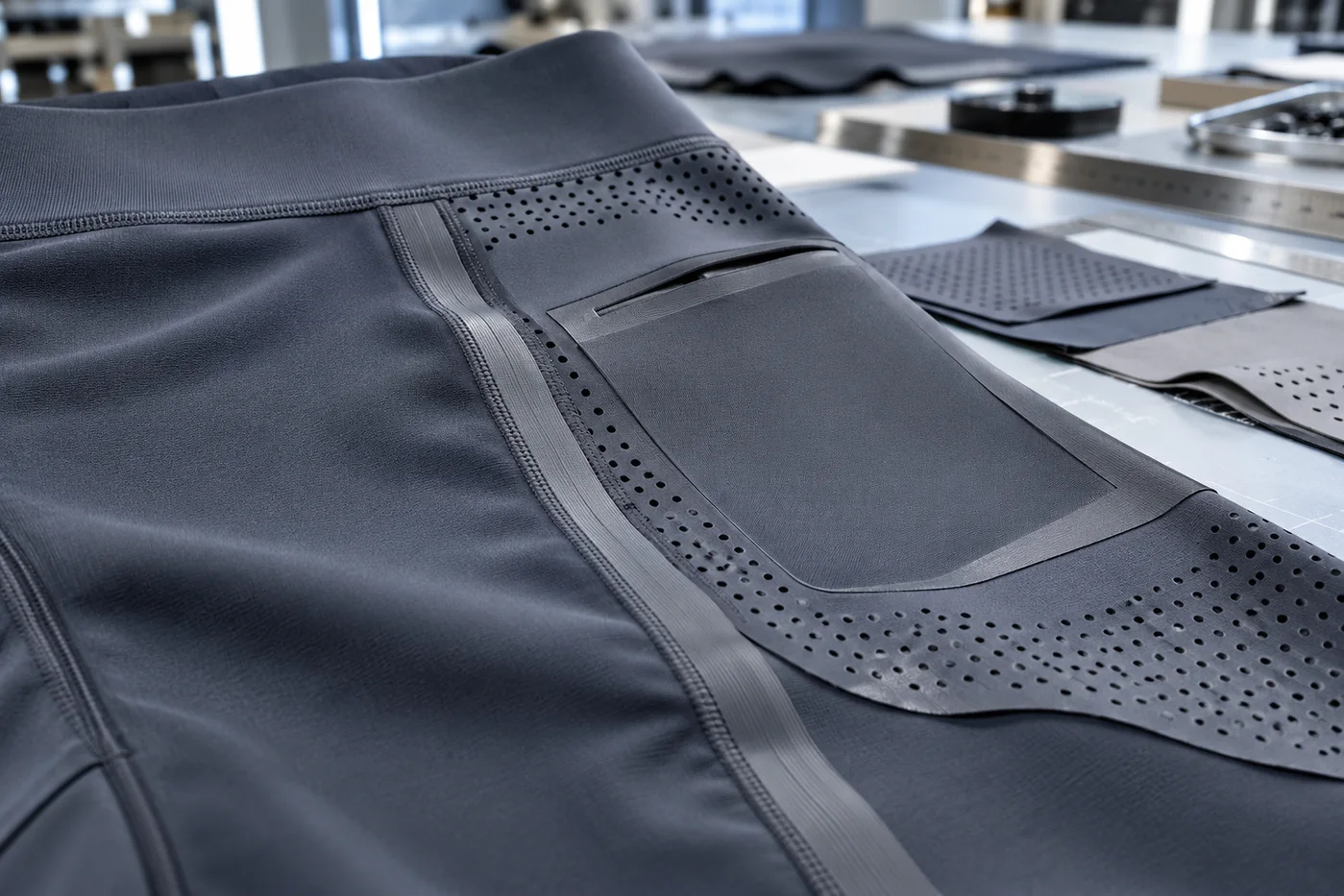
Bonding Is a Material System
Bonded construction depends on the outer fabric, adhesive film or tape, liner, surface finish and activation process. Changing one layer can alter peel strength, stretch and hand feel.
Approve the exact production combination rather than a generic bonded sample. Record material suppliers and lot references where performance is critical.
Design Edges for Laser Cutting
Laser cutting can create precise raw edges and perforation patterns, but results vary with fiber and thickness. Heat may seal some synthetics while leaving discoloration, hardness or melt marks on others.
Set minimum distances between perforations, edges, seams and high-load points. A decorative pattern should not create a tear path during stretch.
Control Heat, Pressure and Time
Bonding equipment settings must activate the adhesive without damaging fabric color, stretch or surface texture. Panel alignment and cooling conditions also affect the finished shape.
Create an approved parameter sheet and first-piece standard. Check bond width, bubbles, wrinkles, contamination and visible adhesive before production continues.
Test Stretch and Peel Resistance
Evaluate the bond in the directions and strain expected in the garment. A pocket opening, hem and high-motion panel experience different loads. Review both initial strength and recovery after repeated extension.
Use a suitable peel or adhesion method when numerical control is needed, and pair it with garment movement testing so the bond is assessed in context.
Verify Care Durability
Heat, detergent and repeated flexing can weaken a bond. Wash and dry the finished garment using the intended care route, then inspect lifting, tunneling, stiffness, discoloration and edge damage.
Bonded construction may require specialized equipment and MOQ planning. Share the panel design, fabric, quantity, care expectation and target use early in the quotation stage.
Relevant Product Program
Custom Activewear Manufacturing · Low MOQ Activewear · Fabric Performance Guides
Discuss Your Fabric Requirements
Share the product category, target quantity, fabric direction, performance claim, colors, care route and destination market with CCLIYA.
Request an OEM or ODM Quote