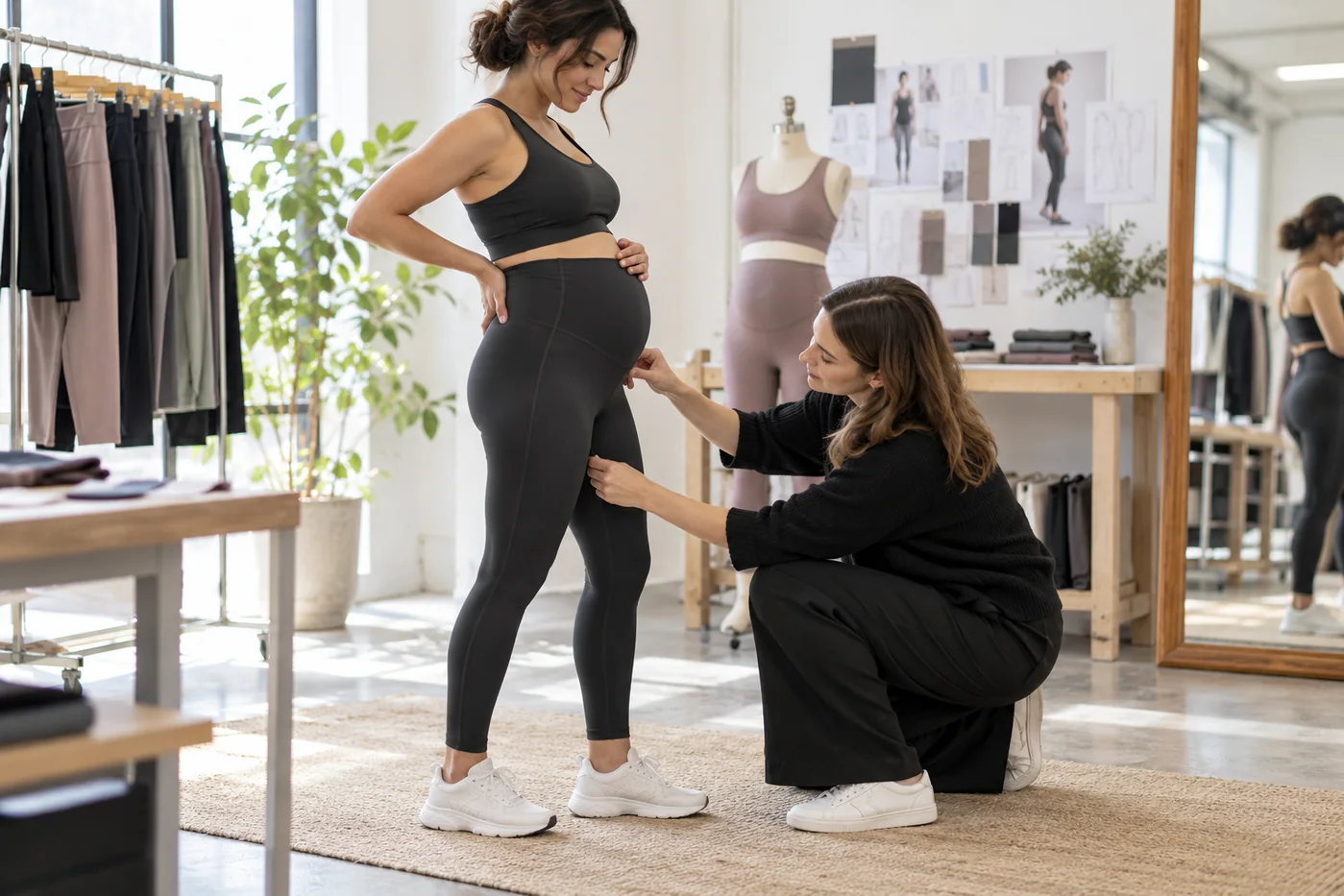
Define the Stage and Use
Maternity activewear needs a defined user stage and activity. A first-trimester studio legging, late-pregnancy walking tight and postpartum transition product require different coverage, adjustability and support.
Avoid treating pregnancy as one fixed body shape. Decide whether the product is designed for a narrow stage, several stages or a reversible fold-over use.
Engineer the Belly Panel
Over-bump, under-bump and fold-over panels distribute pressure differently. Panel height, top-edge tension, seam location and transition into the legging body should be specified together.
Use a soft, recoverable fabric that can expand without creating a tight ridge. Check opacity and surface friction when the panel is highly stretched.
Balance Support and Comfort
Support should be described through construction and fit rather than medical promises. Evaluate whether the garment stays in place during the intended movement without concentrated pressure, rolling or restriction.
Seam placement, gusset design and waistband transitions should avoid sensitive contact zones. Labels and heat transfers also need review for comfort.
Build a Relevant Size Plan
Select a sizing model based on the brand's customer data and intended pregnancy stage. Record body measurements and garment measurements for each fitting rather than relying only on a standard non-maternity chart.
Test the base size and selected edge sizes. Review rise, panel capacity, thigh fit, inseam, waist stability and recovery after wear.
Use Respectful Claims and Testing
Describe fit, adjustability, coverage and fabric properties accurately. Health, circulation or pain-relief claims may require evidence and regulatory review and should not be assumed from garment design.
Share the stage, activity, target measurements, panel route, fabric preferences, size range and quantity with the manufacturer before pattern development.
Relevant Product Program
Yoga Wear Manufacturing · Low MOQ Activewear · Fabric Performance Guides
Discuss Your Fabric Requirements
Share the product category, target quantity, fabric direction, performance claim, colors, care route and destination market with CCLIYA.
Request an OEM or ODM Quote