Lining Has More Than One Job
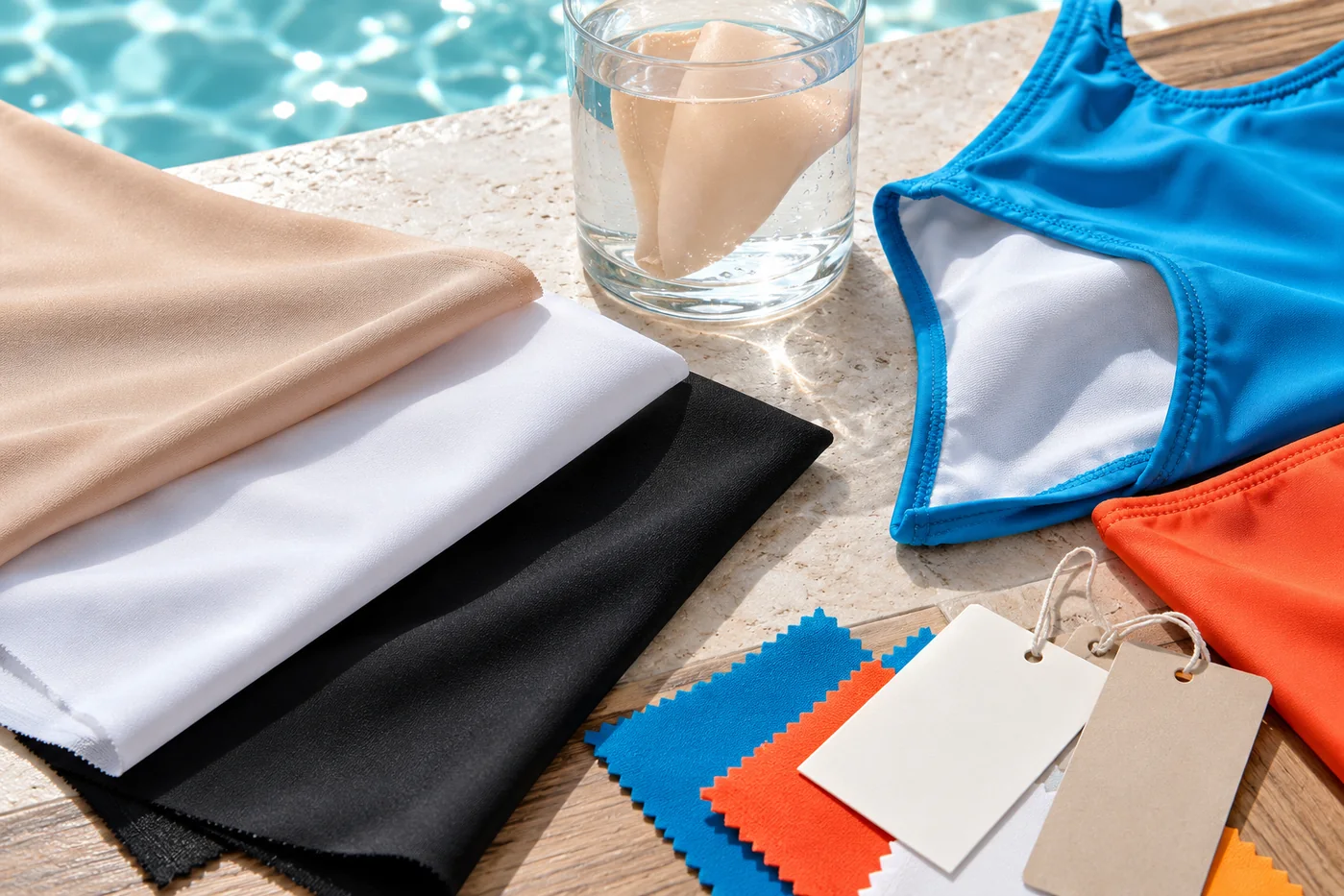
Swimwear lining can improve opacity, support, comfort and shape. Full lining, front lining, gusset lining and pocket lining require different weights and recovery.
Specify where the lining is used and whether it must support removable pads or create modesty under pale outer fabric.
Test Dry and Wet Opacity
A lining that looks opaque when dry may become translucent when wet and stretched. Test the outer fabric and lining together on the intended body area and color.
Nude lining is not universal; the shade should suit the outer color and target customer. White lining can increase brightness but may reveal seams or pads.
Match Stretch and Recovery
If the lining stretches less than the shell, it can restrict fit or create wrinkles. If it is too weak, the shell may carry all the load and become transparent.
Measure both materials in each direction and test the layered assembly. Confirm recovery after water exposure and repeated wear.
Control Water, Chlorine and Color
The lining should drain and dry without holding excessive water. Pool products require compatibility with the intended chlorine exposure and care route.
Check colorfastness and staining between shell, lining, elastic and pads. Dark lining under light shell can become visible when stretched.
Engineer Comfortable Seams
Layered edges can become bulky at leg openings, necklines and straps. Choose seam and elastic methods that secure both layers without twisting or chafing.
Send product type, lining coverage, shell fabric, color, support level, pad use, market and quantity. Approve a wet and washed garment before bulk production.
Relevant Product Program
Swimwear Manufacturing · Low MOQ Activewear · Fabric Performance Guides
Discuss Your Fabric Requirements
Share the product category, target quantity, fabric direction, performance claim, colors, care route and destination market with CCLIYA.
Request an OEM or ODM Quote