Create a Material Identity
Record composition, construction, GSM, usable width, stretch direction, recovery, surface, color and supplier reference. Descriptions such as buttery soft or premium are useful as direction, but production control needs measurable information and an approved physical swatch.
Evaluate fabric on the intended garment. Opacity, compression, drape and handfeel change with pattern tension, color and lining. The same material may perform differently in leggings, a fitted top and a loose training tee.
Choose the Logo Method by Fabric and Use
Heat transfer, silicone transfer, screen print, embroidery and woven badges create different weight, stretch and visual effects. Test the selected method on production fabric because adhesion, distortion and color can change after washing or stretching.
Specify artwork file, finished width and height, color, location and distance from fixed garment edges. Avoid positioning a rigid application across a high-stretch seam or fold unless the sample confirms acceptable performance.
Control Main Labels and Care Labels
Decide whether the brand label is woven, printed, heat transferred or integrated with the size mark. Record dimensions, fold type, attachment position and thread color. Comfort matters in activewear because a stiff or poorly placed label can cause friction.
Care labels should reflect the approved fiber content, country requirements and supported care method. Confirm language, symbols, size order, legal information and placement before bulk printing. Buyers remain responsible for the labeling rules in their sales markets.
Plan Hangtags and Retail Information
Hangtags may communicate brand story, product name, size, price, barcode or material claims. Map each field and provide final print-ready artwork. Define paper, finish, dimensions, hole position and attachment method so the result is repeatable.
Do not print unverified performance or sustainability claims. Material certification, UV protection, recycled content and other claims should be supported by the relevant supplier documentation and the rules of the target market.
Specify Polybags and Shipment Packaging
Define bag type, dimensions, thickness where relevant, warning text, ventilation holes, recycled-content requirements, labels and folding method. Packaging must protect the garment without forcing a presentation that increases creasing or volume unnecessarily.
Outer-carton instructions can include assortment, quantity, carton mark, barcode, destination and packing list requirements. Confirm whether garments are packed individually, by size, by color or as retail sets.
Approve One Complete Brand Pack
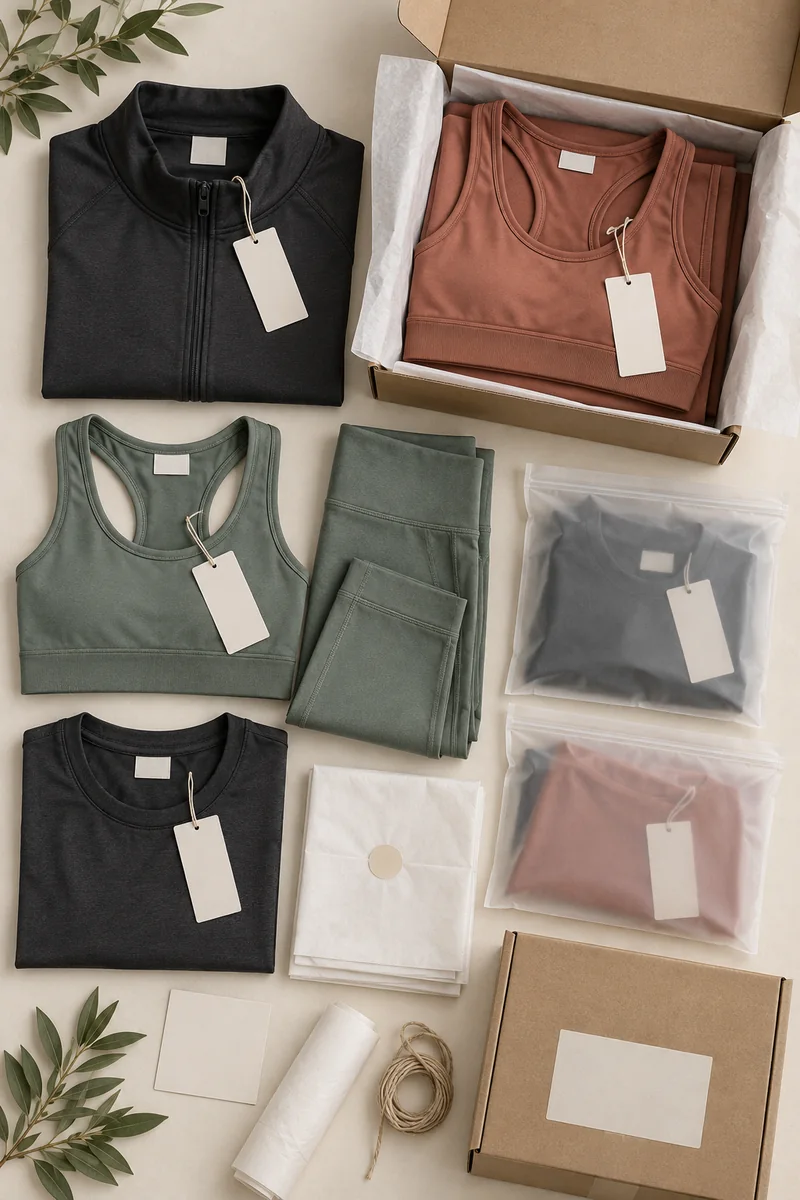
Review the garment, logo, labels, hangtags, polybag and carton information as one system. A separately approved component can still conflict with another element through color, size, position or wording.
Keep final artwork files, color references, placement diagrams and approved samples under version control. This package supports bulk inspection and makes future repeat orders more consistent.
Relevant Product Programs
Discuss Your Activewear Project
Share your product category, target quantity, fabric direction, branding requirements and reference materials with the CCLIYA team.
Request an OEM or ODM Quote