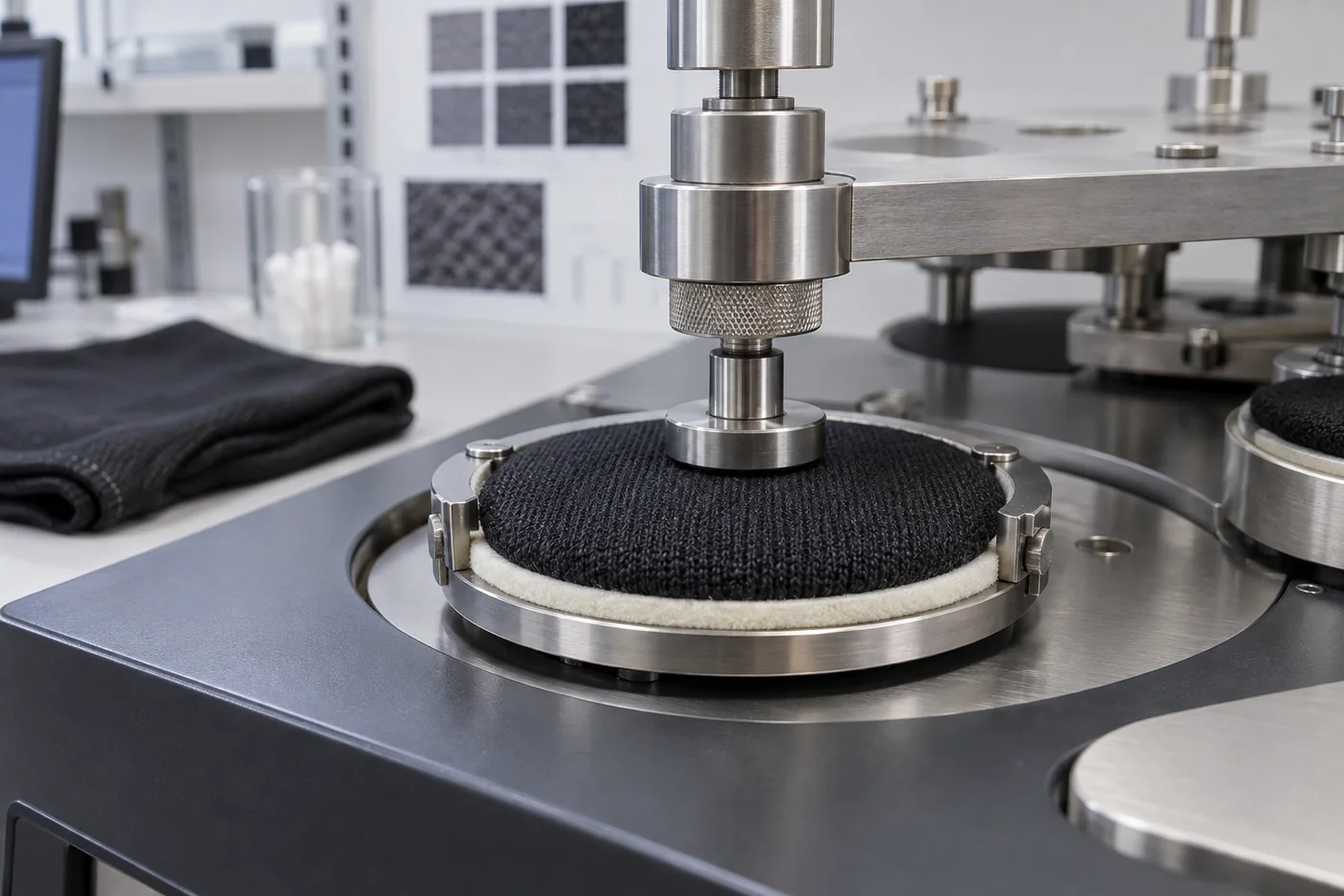
Pilling and Abrasion Measure Different Failure Modes
Pilling evaluates fiber entanglement and visible surface balls created by rubbing. Abrasion testing evaluates resistance to wear, thinning or breakdown under repeated contact. Both results depend on the selected method, pressure, abrasive material and endpoint.
A brushed surface may feel premium yet require a different durability expectation from a smooth high-density interlock. The end use should determine the approval target.
Build Durability into the Specification
Identify high-contact zones such as inner thighs, seat panels, underarms, backpack areas or equipment contact points. Then agree the relevant pilling grade, abrasion cycle target, wash conditioning and visual reference.
Yarn twist, filament structure, knit density, singeing, brushing and anti-pilling finishing can influence performance. These choices also affect softness, stretch, appearance and cost.
Control Bulk Against the Approved Surface
Keep an approved fabric swatch and tested garment as the physical standard. During bulk review, compare shade, surface hairiness, weight, width and finishing. Test representative lots when the specification requires it.
Care labeling matters: washing temperature, turning garments inside out and avoiding rough mixed loads may help preserve appearance, but instructions should not replace suitable material selection.
Suitable Activewear Applications
Leggings, cycling shorts, gym sets, teamwear, equipment-contact garments and high-use athleisure.
Related Manufacturing & Buyer Guides
Buyer FAQ
Is an anti-pilling finish permanent?
Durability varies with chemistry, application and laundering. Any claimed result should be evaluated after the agreed wash cycles.
Why do soft brushed fabrics pill more easily?
Brushing raises surface fibers to create softness. Those exposed fibers can be more vulnerable to friction unless the yarn and finishing are selected carefully.
Can a pilling grade predict every wear situation?
No. Laboratory methods improve comparison, but consumer use, equipment contact, garment fit and laundering also affect appearance.
Send the Fabric Requirement
Include the garment category, target market, expected quantity, composition or hand-feel reference, required performance, color plan and applicable test method. CCLIYA can then review the development route, sampling scope and evidence needed before bulk approval.
Request Fabric Development