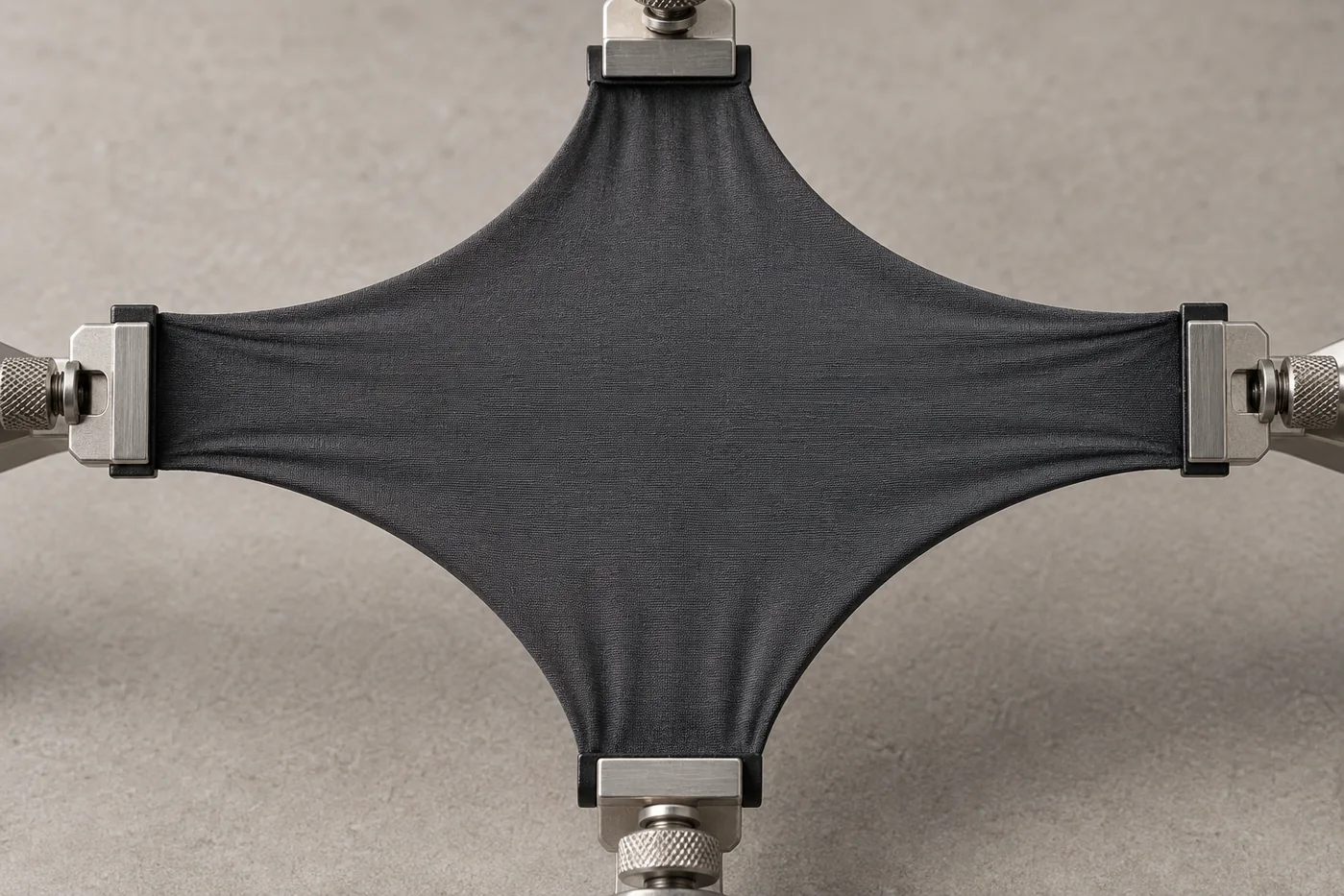
Stretch Percentage Does Not Define Fit
Elongation shows how far a material can extend, but it does not explain how strongly it resists extension or how well it returns after wear. Modulus influences compression and comfort, while recovery affects bagging at knees, elbows and waistbands.
Fabric weight, elastane content, knit density and heat setting all contribute to the final behavior. Pattern reduction and seam selection must be developed for the approved fabric rather than copied from a different material.
Specify Direction, Load and Recovery
A useful specification separates course and wale directions, identifies the test load or extension, defines the recovery interval and includes an acceptable growth limit. Opacity should also be checked at the extension expected on the body.
For leggings and compression products, evaluate fabric force together with waistband construction and size grading. Excessive force can create discomfort even when recovery is technically strong.
From Lab Swatch to Garment Sample
Approve the fabric first, then confirm the garment through fitting, movement and laundering. Review seam grin, print cracking, logo distortion and color change while the fabric is extended.
Bulk inspection should compare width, GSM, stretch and recovery against the approved lot because small material changes can alter fit across an entire size range.
Suitable Activewear Applications
Leggings, sports bras, fitted tops, cycling shorts, tennis skorts, compression shorts and close-fitting swim or training garments.
Related Manufacturing & Buyer Guides
Buyer FAQ
Does more elastane always mean better recovery?
No. Yarn quality, knit construction, heat setting, dyeing and fabric weight also influence recovery and durability.
How should stretch be approved for leggings?
Confirm elongation and recovery in both directions, opacity at wear extension, modulus, dimensional stability and a movement-based garment fitting.
Can one pattern use different four-way stretch fabrics?
Not safely without review. Differences in modulus, width, GSM and recovery can change finished measurements, comfort and size grading.
Send the Fabric Requirement
Include the garment category, target market, expected quantity, composition or hand-feel reference, required performance, color plan and applicable test method. CCLIYA can then review the development route, sampling scope and evidence needed before bulk approval.
Request Fabric Development