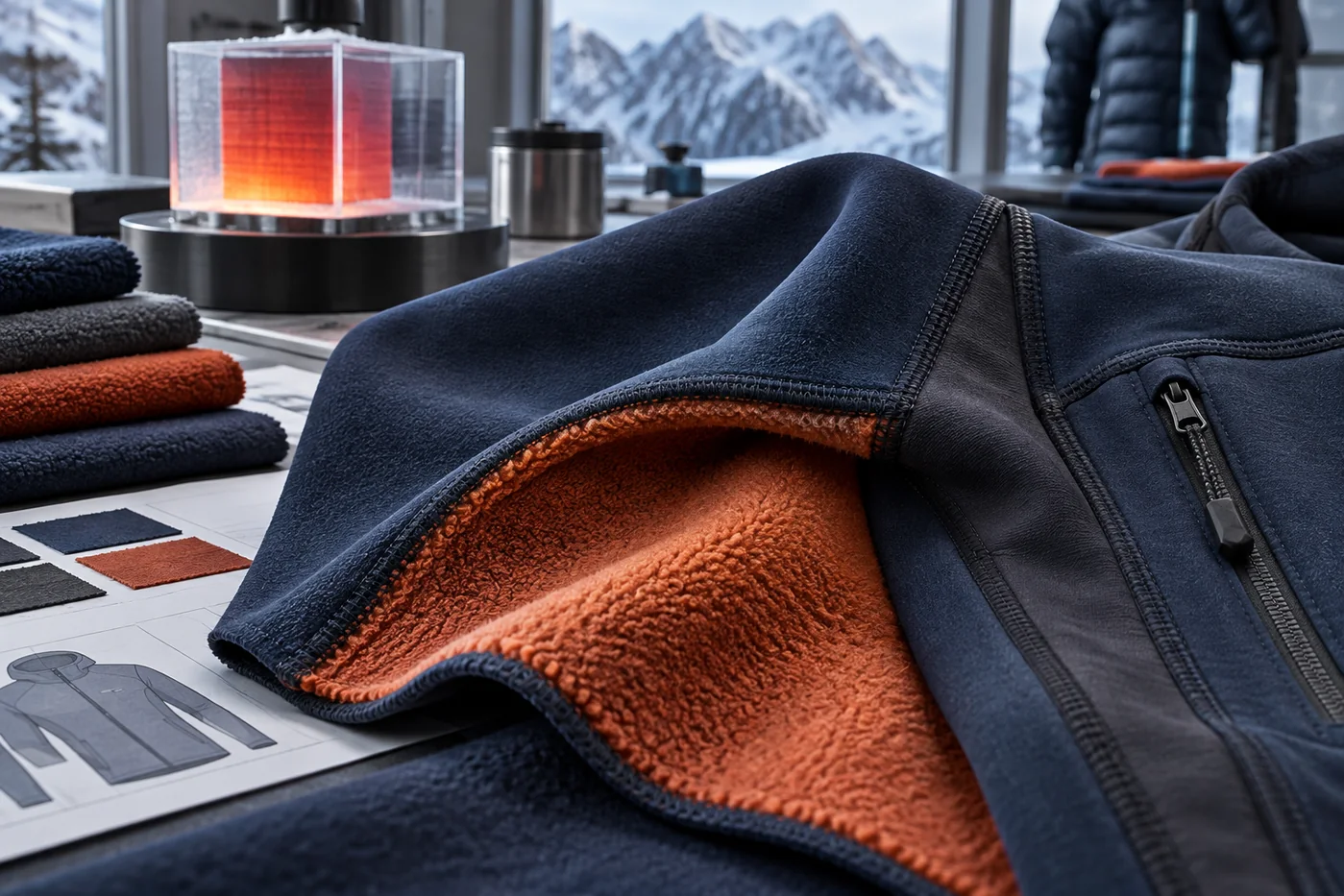
Read the Face and Back Separately
Stretch fleece often combines a smooth outer face with a brushed inner surface. The face supports abrasion resistance and layering, while the pile traps air and changes next-to-skin warmth.
Specify composition, GSM, thickness, stretch, brushing level and finish. Two fabrics at the same weight can feel different because the pile height and density are different.
Match Warmth to Activity
High-pile fleece may suit low-intensity cold use but become too warm during running. Lighter grid or microfleece constructions can improve moisture pathways and reduce bulk.
Test the intended base layer, fleece garment and outer shell together. Layering can change evaporation and perceived warmth more than the fleece alone.
Protect Stretch and Recovery
Brushing and heat history can affect fabric force. Measure extension and recovery after finishing and laundering, not only on greige fabric.
Check knees, elbows and seat after repeated movement. Weak recovery can create bagging, while excessive force can restrict a close-fitting winter tight.
Control Pilling and Fiber Shedding
The brushed surface may pill or shed under friction. Evaluate the inside against base layers and the face against packs, jackets and equipment.
Inspect dark and light colors after washing for visible lint. Care instructions and fabric finishing should match the approved result.
Plan Seams, Zippers and Pockets
Fleece thickness can create bulky intersections, and the pile may catch in zipper stitching. Stabilize pocket openings without making the garment rigid.
Provide activity, temperature range, fit, layering plan, target warmth, pocket design, colors and quantity so material selection supports the final construction.
Relevant Product Program
Men's Gym Wear Manufacturing · Low MOQ Activewear · Fabric Performance Guides
Discuss Your Fabric Requirements
Share the product category, target quantity, fabric direction, performance claim, colors, care route and destination market with CCLIYA.
Request an OEM or ODM Quote