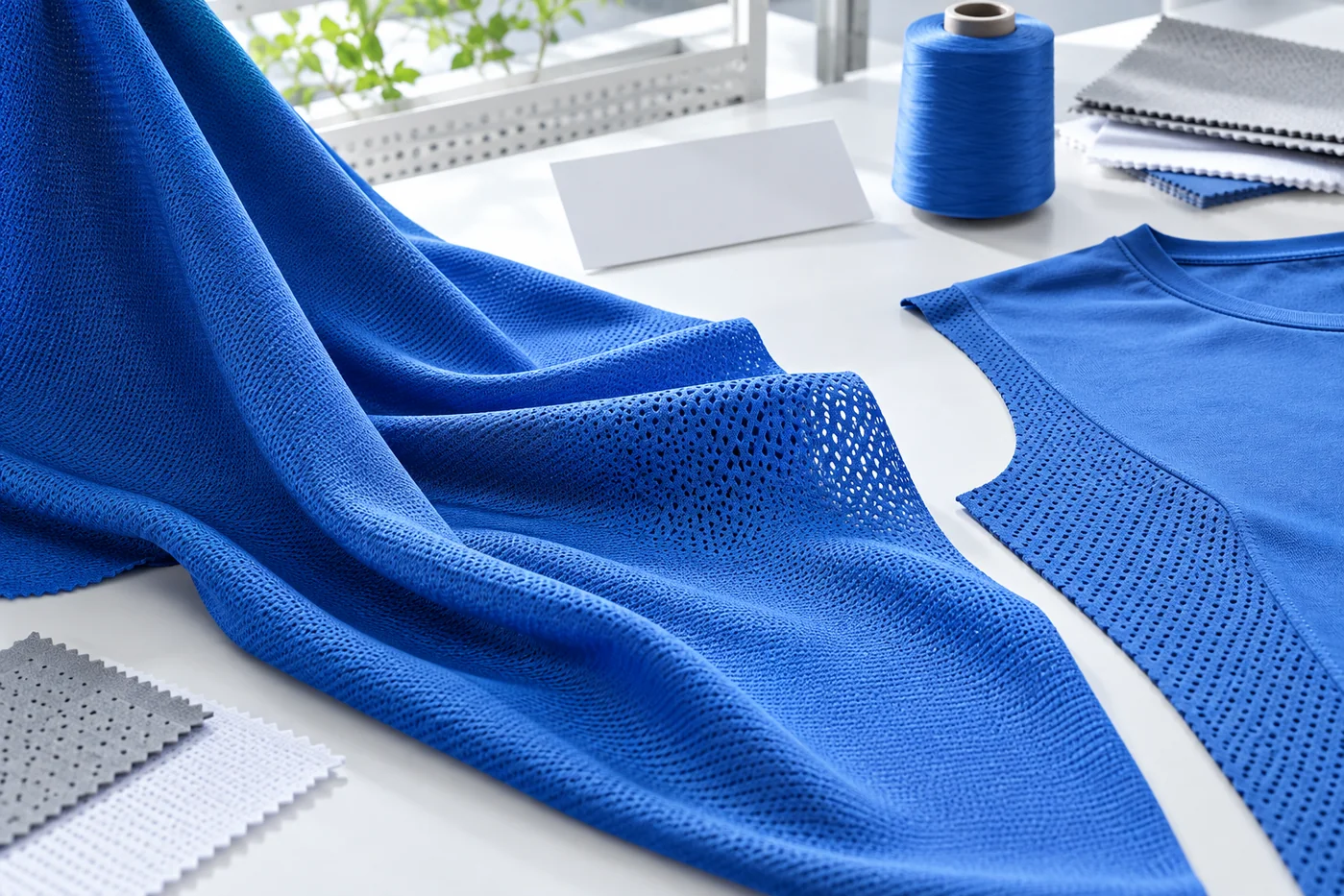
Why Single Jersey Is Used
Single jersey is a relatively light knit with a face and back that look different. It can give training tops soft drape, efficient material use and comfortable airflow, but its edges may curl and its stability depends on yarn and finishing.
Specify the construction with composition, yarn type, gauge, GSM, width and finish. The name single jersey alone is too broad for a repeatable product.
Balance Weight and Coverage
A lighter fabric may feel cooler and dry quickly, but it can become transparent, cling when wet or show seam and body contours. A heavier fabric can improve coverage while reducing airflow and increasing drying time.
Review the selected color on the body and under the lighting expected in use. White and pale shades often require separate opacity evaluation.
Plan Moisture and Ventilation
Polyester does not automatically wick moisture. Capillary yarns, knit geometry and finishes influence spreading and drying. Define whether the product needs quick evaporation, open ventilation zones or simply a light hand.
Test the finished top at the underarm, back, neck and printed areas. Solid heat transfers or dense prints may change airflow compared with the undecorated swatch.
Manage Snagging and Spirality
Fine exposed loops can catch on rough gym equipment, hooks or hook-and-loop closures. Run a snagging or wear simulation appropriate to the intended market and inspect the surface after laundering.
Single jersey can twist after relaxation or washing. Check spirality, side-seam movement and dimensional change before approving the production pattern.
Match Construction and Decoration
Use seams, neck finishes and labels that suit the fabric weight. Excessive stitch density, heavy rib or a rigid logo can distort a light body fabric.
For inquiry, provide the sport, climate, fit, target GSM, color, print route, snag requirement and care label. The supplier can then compare standard and custom fabric routes.
Relevant Product Program
Men's Gym Wear Manufacturing · Low MOQ Activewear · Fabric Performance Guides
Discuss Your Fabric Requirements
Share the product category, target quantity, fabric direction, performance claim, colors, care route and destination market with CCLIYA.
Request an OEM or ODM Quote