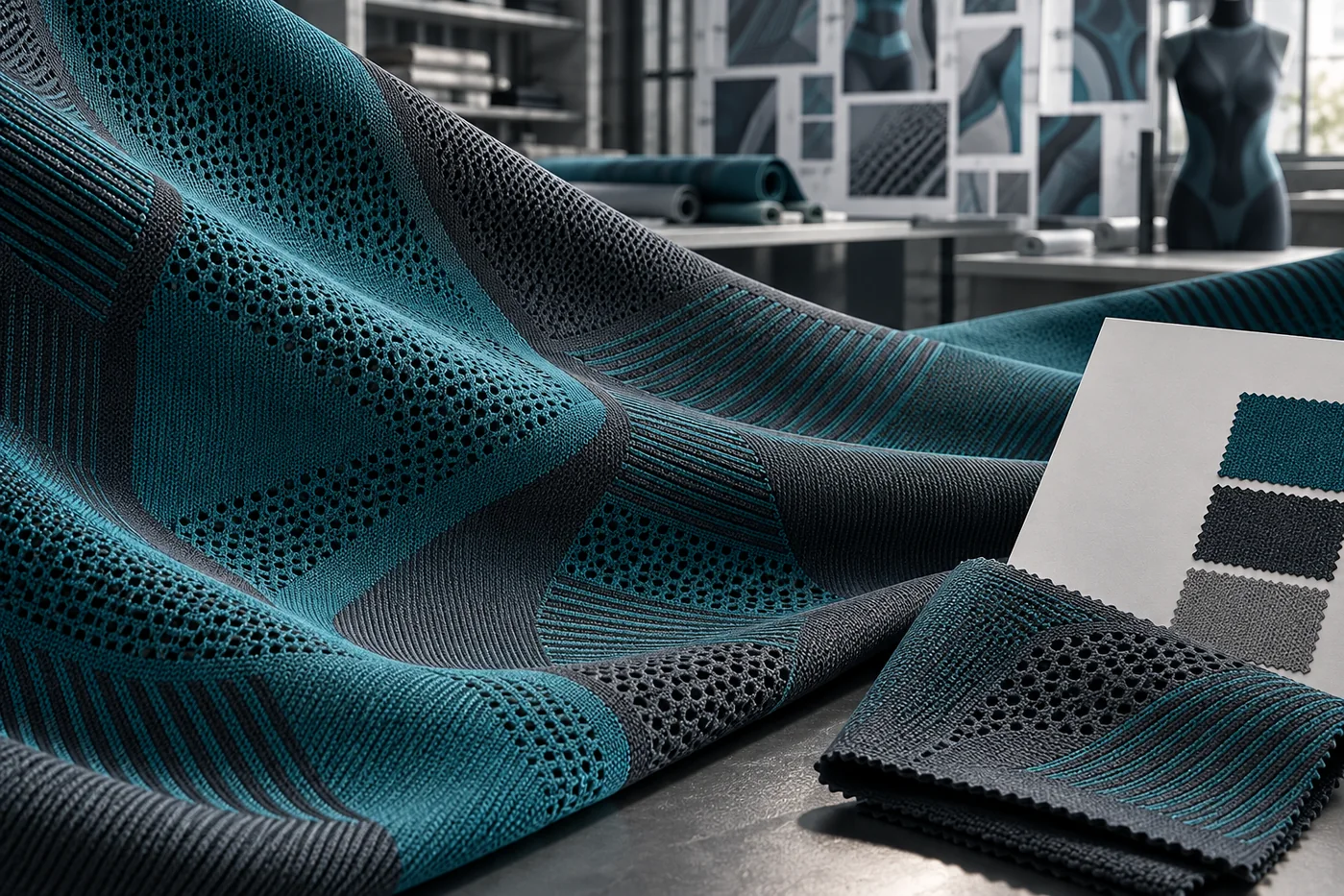
Jacquard Builds the Pattern Into the Knit
Engineered jacquard changes stitch structure or yarn arrangement to create texture, graphics and ventilation zones without printing the surface. This can give activewear a distinctive technical appearance and reduce separate mesh panels.
Clarify whether the program uses roll-goods jacquard, panel engineering or a seamless garment system. Each route has different artwork, size and minimum requirements.
Design for Stretch and Opacity
Open knit zones stretch and reveal the layer or skin beneath them. Test pattern scale and openness on the intended garment size, because a flat fabric presentation does not show body extension.
Dense and open areas can also have different recovery. Keep critical support zones away from structures that distort or relax too easily.
Control Pattern Placement
For roll goods, pattern repeat affects marker planning and waste. For engineered panels, artwork must align with body zones and grading. Define center lines, seam references and acceptable placement tolerance.
Review how the motif meets at side seams, shoulders and hems. A strong geometric pattern makes small misalignment more visible.
Approve Yarn, Color and Handfeel
Multi-yarn jacquards can show shade differences, float exposure or unexpected luster. Approve the actual yarn combination and colorway under relevant lighting.
Inspect the reverse side for floats or roughness that may contact skin. Test snagging and abrasion where the knit contains elongated or open structures.
Prepare for Repeat Production
Keep the approved digital pattern version, repeat dimensions, yarn codes, machine route, finishing and physical sample. A visual reference alone is not enough to reproduce an engineered fabric.
Provide garment sizes, zone placement, stretch, opacity target, color count and quantity early. Jacquard development and machine setup may affect sampling cost, MOQ and timing.
Relevant Product Program
Custom Activewear Manufacturing · Low MOQ Activewear · Fabric Performance Guides
Discuss Your Fabric Requirements
Share the product category, target quantity, fabric direction, performance claim, colors, care route and destination market with CCLIYA.
Request an OEM or ODM Quote