Understand the Air-Layer Construction
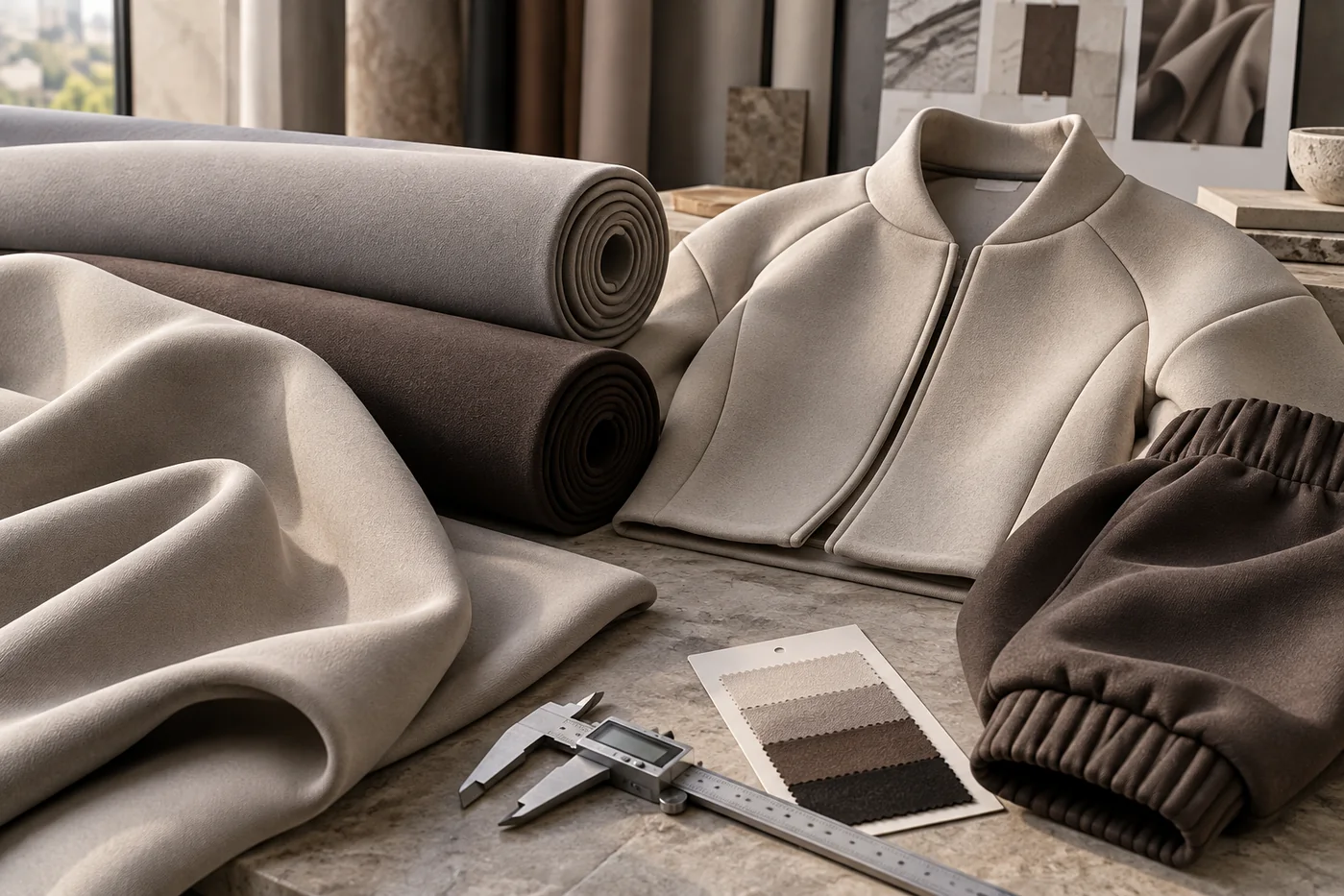
Air-layer double knit uses two faces connected within the fabric, creating body and a cushioned hand without a separate foam layer. It is often used for structured jackets, joggers, sweatshirts and travel sets.
Suppliers may use air layer, spacer knit or scuba-like names differently. Confirm the construction, fiber content, thickness, GSM and face appearance on a physical sample.
Balance Structure and Movement
The fabric should hold a clean silhouette without feeling board-like. Check bending at elbows, knees and shoulders, and confirm that recovery is suitable for cuffs, waist and seat areas.
A fabric with strong body may need additional ease or shaped panels. Do not copy a lightweight jersey pattern without evaluating seam bulk and mobility.
Review Warmth and Breathability
The internal space can add insulation, but warmth depends on thickness, density and layering. It may suit transitional weather better than high-sweat indoor training.
Conduct wear testing in the intended climate and review moisture handling at the back, underarm and waistband. Marketing claims should reflect the actual use.
Engineer Seams and Components
Thick double knit can create bulky seam intersections at collars, pockets and waistbands. Grade seam allowances, choose suitable needles and test zipper installation before finalizing the design.
Bonding or laser cutting may be possible on selected constructions, but adhesion and edge durability must be tested with the exact finish.
Control Surface and Wash Stability
Inspect pilling, snagging, creasing, pressing marks and dimensional change after laundering. Light colors may show seam impressions or surface dirt more easily.
For development, send garment type, target thickness, structure, stretch, climate, colors and quantity. Approve bulk against a retained fabric and finished-garment standard.
Relevant Product Program
Custom Activewear Manufacturing · Low MOQ Activewear · Fabric Performance Guides
Discuss Your Fabric Requirements
Share the product category, target quantity, fabric direction, performance claim, colors, care route and destination market with CCLIYA.
Request an OEM or ODM Quote