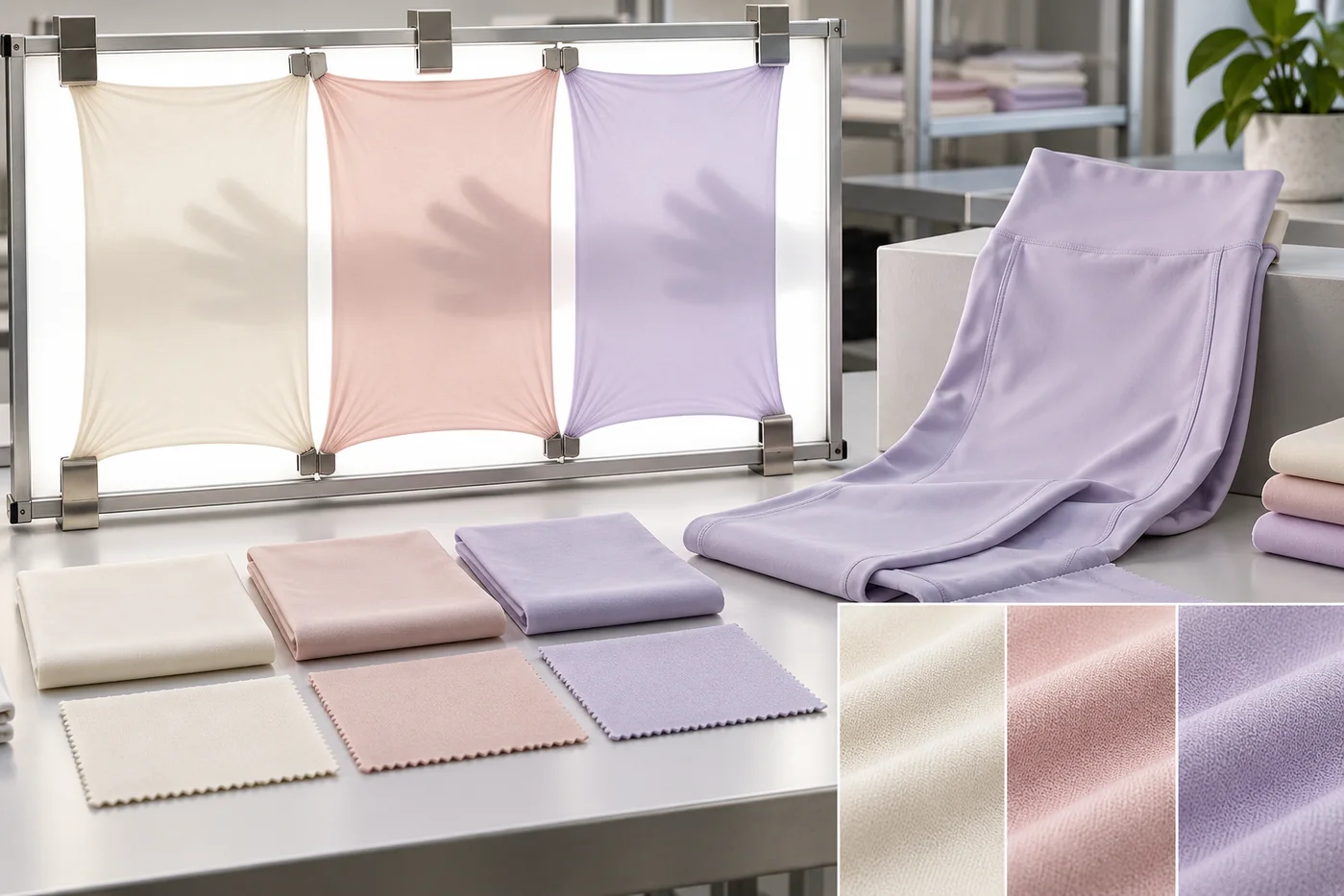
Why Light Colors Need Separate Approval
A dense 75% nylon 25% spandex fabric may look opaque while relaxed yet become translucent when stretched across the seat and thigh. Pale dye shades reflect and transmit light differently from black, so approval of one dark color cannot represent the full range.
Review every launch shade on the production fabric and intended garment size. Keep the light source, model, underwear color and movement consistent so comparisons are meaningful.
Test at Real Garment Extension
A loose swatch placed over a hand does not reproduce the extension created by pattern reduction. Measure garment and body dimensions at critical areas, then test the fabric at a comparable extension or in the finished sample.
Include standing, deep squat, forward fold and seated positions. Inspect the seat, gusset, front rise and pocket zones from practical viewing distances as well as under controlled backlighting.
Control What Sits Beneath the Fabric
Pocket bags, care labels, seam allowances and contrasting underwear may become visible before the main fabric appears transparent. Select component colors deliberately and place labels away from high-stretch viewing areas.
If lining is required, match its stretch and recovery to the shell. A rigid liner can restrict movement, while a weak liner may wrinkle or shift instead of improving coverage.
Balance Coverage With Comfort
Increasing GSM or knit density can improve coverage, but it can also raise fabric force and thermal load. Do not solve opacity by making the product unnecessarily heavy for studio practice or warm climates.
Compare density, yarn, finishing and pattern reduction together. A small fit adjustment may protect coverage more effectively than a major weight increase.
Approve Color and Bulk Consistency
Confirm lab dips on the final quality and inspect shade under daylight and retail lighting. Test dimensional change, recovery and opacity again after laundering because relaxation can alter the way the garment fits and stretches.
Define the acceptable standard with retained swatches and finished samples. State which colors need enhanced opacity review in the purchase file before fabric cutting begins.
Relevant Product Program
Yoga Wear Manufacturing · Low MOQ Activewear · Fabric Performance Guides
Discuss Your Fabric Requirements
Share the product category, target quantity, fabric direction, performance claim, colors, care route and destination market with CCLIYA.
Request an OEM or ODM Quote