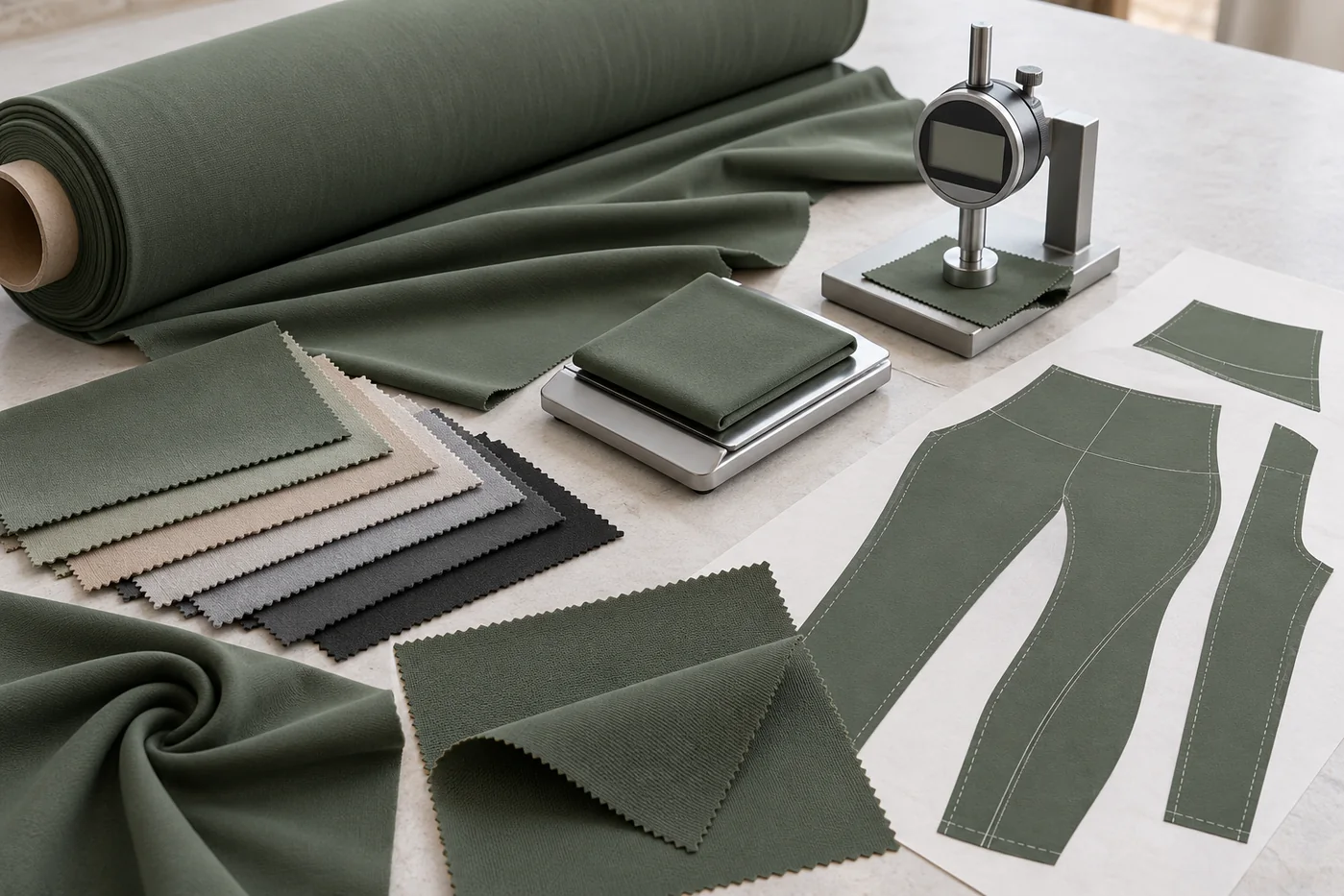
Composition Is Only the Starting Point
A label stating 75% nylon and 25% spandex identifies the fiber ratio, but it does not define how the fabric will feel or perform. Yarn size, knit construction, gauge, density, heat setting and finishing can make two fabrics with the same composition behave very differently.
Ask whether the fabric is interlock, single jersey or another construction, then record the supplier fabric code, usable width and finished specification. Approve a physical cutting from the intended quality rather than choosing from composition alone.
Choose GSM for the Product, Not the Trend
Higher GSM can add body and coverage, but it may also increase heat, drying time and seam bulk. Lower GSM can feel lighter yet may need more careful opacity and recovery control, especially in pale colors and extended sizes.
Evaluate candidate weights on the actual legging, short or sports-bra pattern. The correct target depends on climate, compression, customer expectations and whether the surface is brushed or smooth.
Measure Stretch Force and Recovery
Twenty-five percent spandex does not guarantee a particular compression level. Elastane yarn type, knit density and finishing influence the force required to extend the fabric and its ability to return after repeated movement.
Record extension and recovery in both directions using an agreed method. Fit the garment after wash and repeated stretching to identify knee bagging, waistband movement or excessive pressure before bulk approval.
Verify Opacity, Color and Surface
Test opacity at the extension created by the selected size during squats and bends. Review each launch color because white, pastel and saturated shades may not provide the same coverage even when they use the same base construction.
Inspect pilling, snagging, shine, rubbing fastness and shade consistency. If the fabric is brushed, define the required surface level and cutting direction so finished panels have a consistent appearance.
Write a Bulk-Ready Specification
The order file should identify composition, construction, GSM tolerance, usable width, stretch and recovery, dimensional change, color reference, finish, care route and relevant test requirements. Connect the approved fabric to the approved garment sample.
For an accurate quotation, send the product type, target weight or handfeel, compression level, colors, size range, quantities and destination market. This allows sourcing decisions to match the actual yoga program.
Relevant Product Program
Yoga Wear Manufacturing · Low MOQ Activewear · Fabric Performance Guides
Discuss Your Fabric Requirements
Share the product category, target quantity, fabric direction, performance claim, colors, care route and destination market with CCLIYA.
Request an OEM or ODM Quote