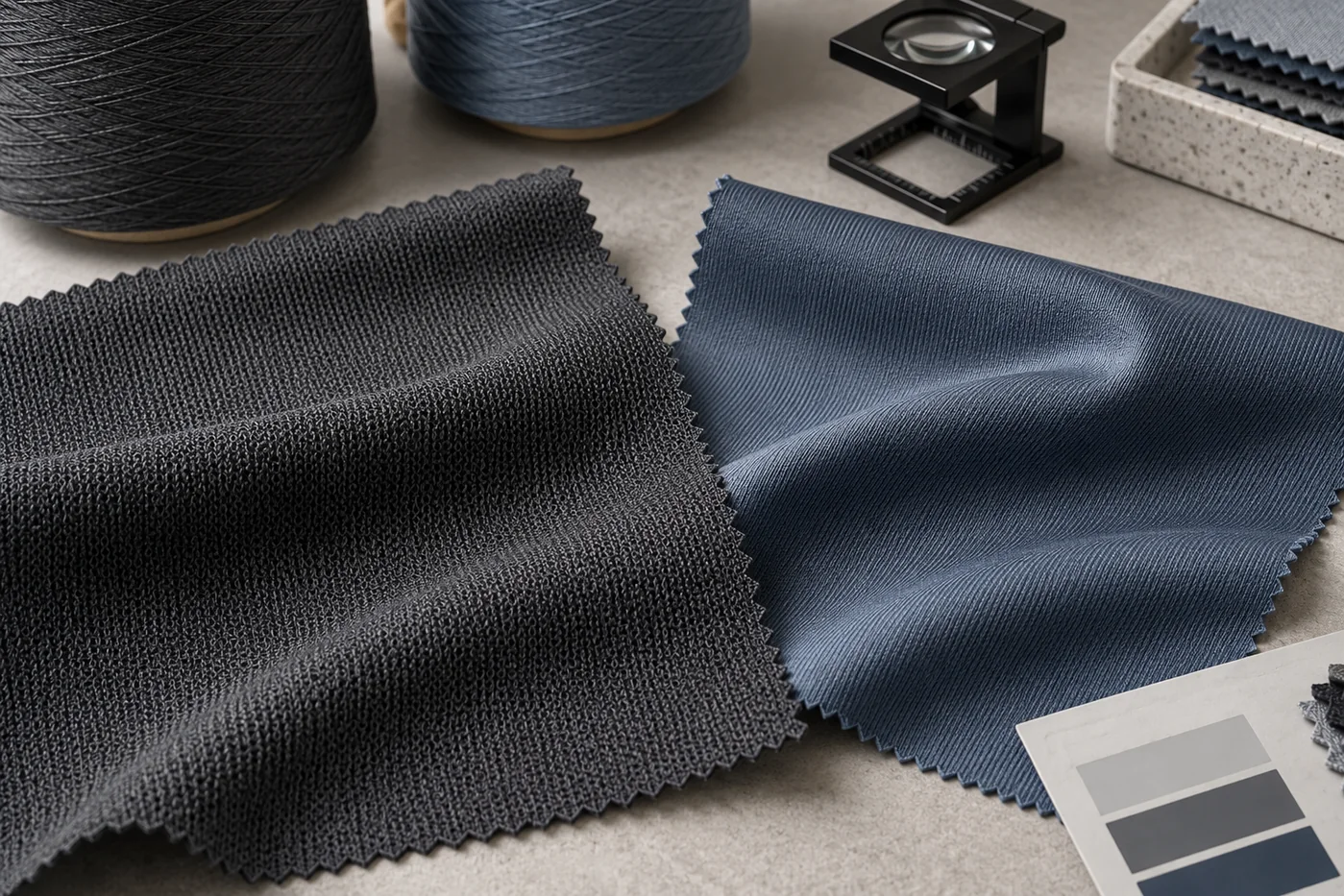
Compare the Fiber Before the Finish
Polyester and nylon are both synthetic fibers, but the finished garment is shaped by yarn type, knit construction, weight, elastane content and finishing. A buyer should not approve a fabric only because the composition line uses a familiar fiber name.
Start with the activity, climate, desired handfeel, durability requirement and target price. Then compare actual production-quality swatches with the same color and intended finish wherever possible.
Handfeel and Moisture Behavior
Nylon is often selected for a smooth, soft and slightly lustrous hand, while polyester can range from dry and structured to very soft when fine yarns and appropriate finishes are used. Neither fiber guarantees comfort without considering construction and surface treatment.
Polyester absorbs relatively little moisture and can support fast-drying products, but wicking still depends on yarn and fabric design. Nylon may take up more moisture, which can influence drying time and wet handfeel. Test the complete fabric rather than relying on a fiber-level assumption.
Abrasion, Snagging and Recovery
Both fibers can perform well in activewear. Nylon is commonly associated with strong abrasion performance, while polyester is widely used for durable training tops and printed sportswear. Actual pilling and snag resistance must be confirmed on the selected knit.
When elastane is added, recovery depends on elastane percentage, yarn quality, fabric density and heat history. Request elongation and recovery information in both directions and verify the result after laundering.
Dyeing, Printing and Color
Polyester is compatible with disperse dye routes and is widely used for sublimation printing. Nylon uses different dye chemistry and may show shade sensitivity, especially in deep colors or when trims must match the body fabric.
Approve lab dips, colorfastness and migration risk for the real fabric and color. A color standard developed for polyester should not automatically be transferred to a nylon program.
Choose by Product and Supply Route
Polyester can suit lightweight tees, jerseys and sublimated products, while nylon blends are frequently chosen for smooth leggings, bras and premium studio garments. These are common routes, not fixed rules.
For a quotation, provide the garment, GSM range, stretch, finish, color count, print method, performance priorities and quantity. Compare fabric availability and repeat-order continuity together with unit cost.
Relevant Product Program
Custom Activewear Manufacturing · Low MOQ Activewear · Fabric Performance Guides
Discuss Your Fabric Requirements
Share the product category, target quantity, fabric direction, performance claim, colors, care route and destination market with CCLIYA.
Request an OEM or ODM Quote