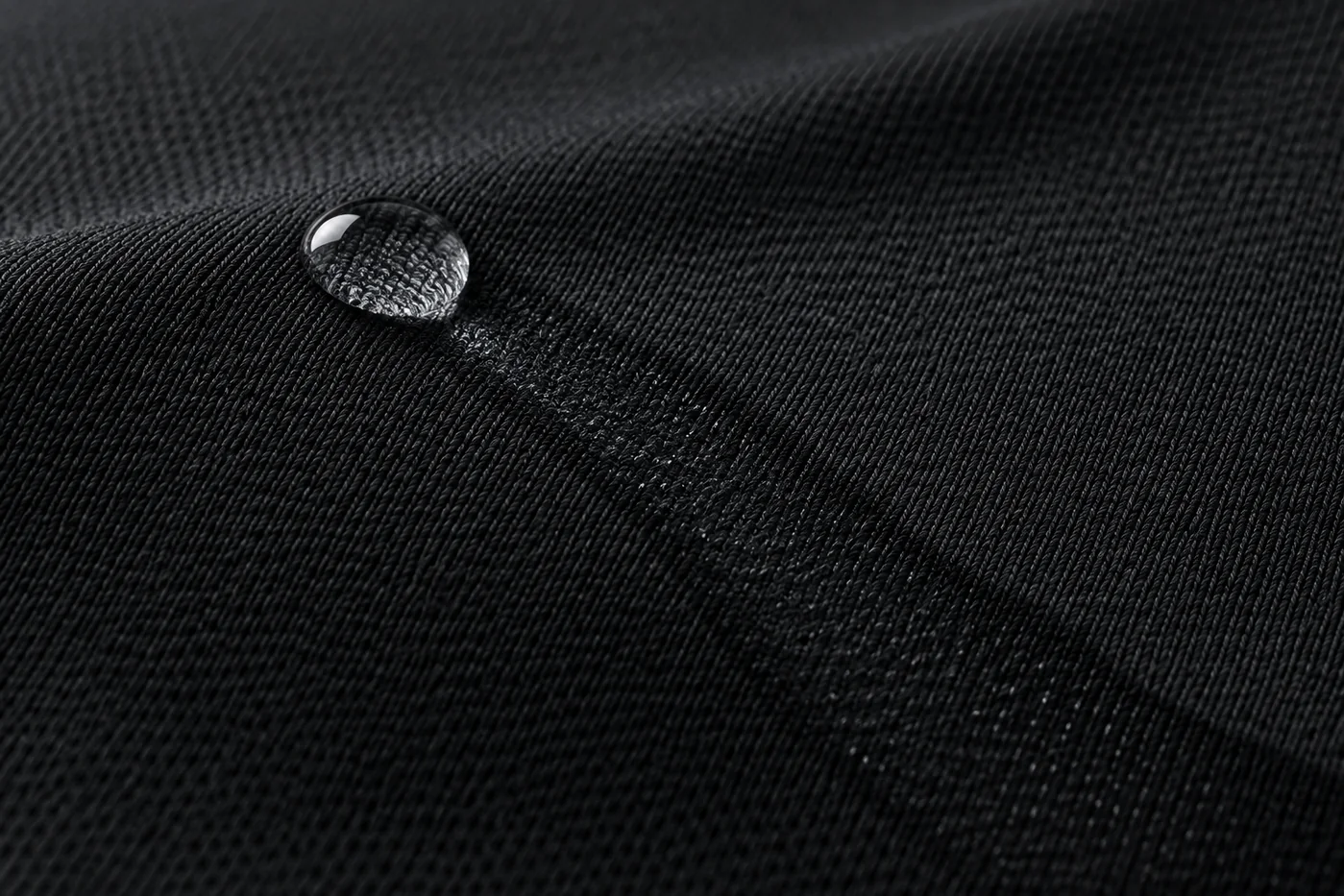
Wicking and Quick-Dry Are Different Decisions
Wicking describes how liquid moves away from a contact area through the fabric. Quick-dry performance describes how efficiently retained moisture spreads and evaporates. A fabric may perform well in one area without meeting the other requirement, so the two should be approved separately.
Fiber type, yarn geometry, knit structure, fabric weight and surface finishing can all change the result. The appropriate combination depends on whether the garment is designed for yoga, running, tennis, gym training or daily athleisure.
What Buyers Should Put in the Fabric Brief
Define the garment category, expected climate, target GSM, stretch requirement, opacity, desired hand feel and wash-care route. If a numerical requirement matters, name the method and acceptance range in the specification instead of using only terms such as sweat-wicking or breathable.
CCLIYA can compare available constructions, prepare sample yardage and coordinate garment sampling so performance, fit and appearance are approved together.
Approval Before Bulk
A practical approval sequence can include water-drop spreading, drying-time comparison, moisture-vapor transmission where relevant, dimensional stability and repeated-wash checks. Test conditions and sample conditioning should remain consistent so results can be compared.
Final performance depends on the approved fabric, color, finishing, garment construction and care conditions. Production fabric should be checked against the approved reference rather than judged by touch alone.
Suitable Activewear Applications
Training tops, running layers, tennis apparel, yoga tops, gym T-shirts and lightweight warm-weather activewear.
Related Manufacturing & Buyer Guides
Buyer FAQ
Is moisture-wicking the same as quick-dry?
No. Wicking concerns liquid transport across or through the textile, while quick-dry performance concerns how moisture spreads and evaporates after wetting.
Can the result change after washing?
Yes. Finishes, detergent, heat and repeated laundering can change surface behavior, so the agreed care cycle should be included in approval testing.
Which fabric is best for hot-weather activewear?
There is no single best construction. Weight, openness, moisture handling, opacity, stretch and garment design need to be balanced for the intended activity and market.
Send the Fabric Requirement
Include the garment category, target market, expected quantity, composition or hand-feel reference, required performance, color plan and applicable test method. CCLIYA can then review the development route, sampling scope and evidence needed before bulk approval.
Request Fabric Development