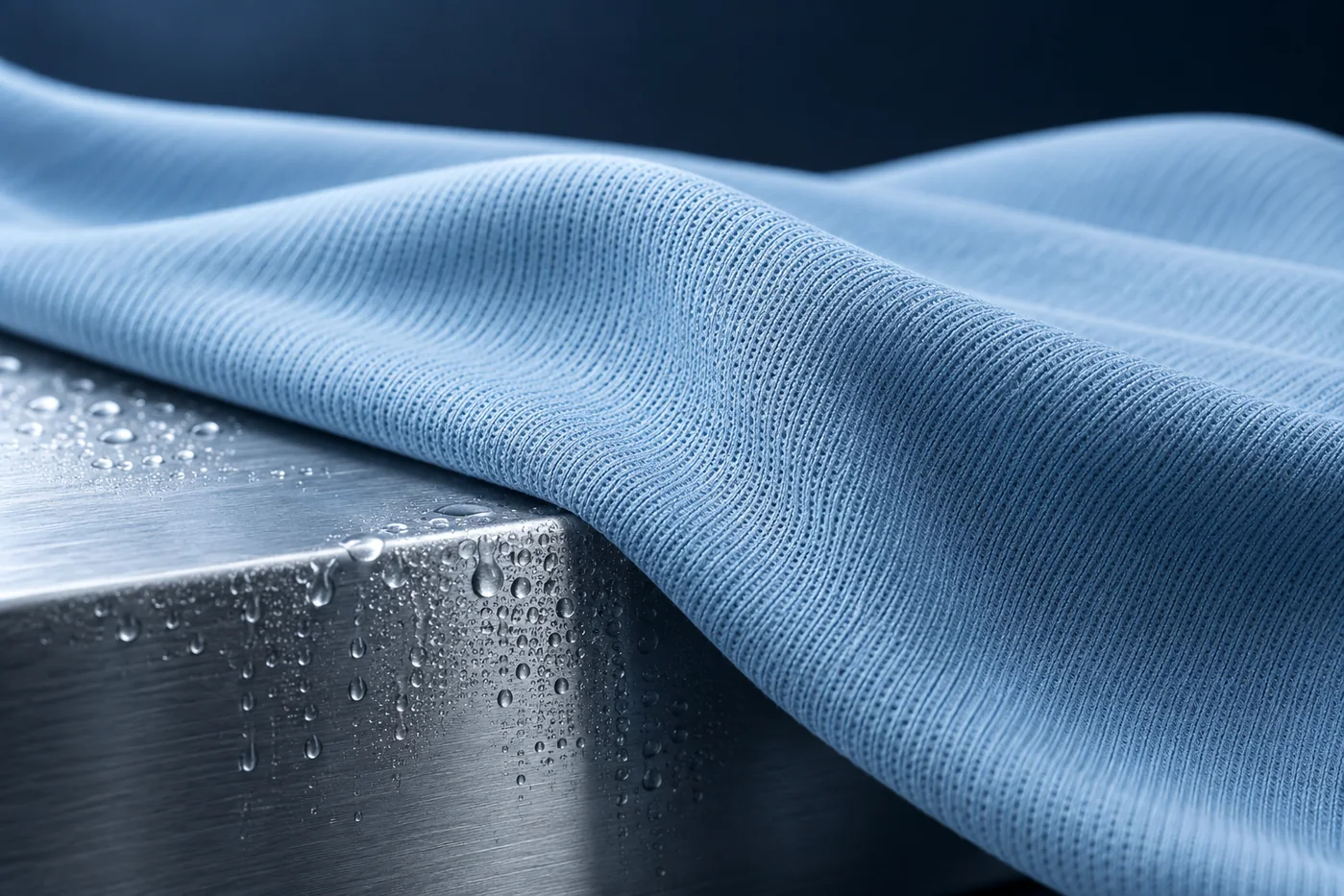
Understand What Q-Max Measures
Q-max is commonly used to describe the peak heat flow when a material first contacts a warmer surface. It is associated with an initial cool-touch sensation, not automatically with long-term cooling during exercise.
Fiber conductivity, yarn shape, fabric density, surface contact and moisture can affect the result. Compare values only when specimens are conditioned and tested under the same method.
Physical Cooling vs Sensory Cooling
Physical cooling strategies may use conductive fibers, moisture spreading, evaporation and airflow. Sensory finishes can create a temporary cool perception through ingredients such as menthol-like systems. These routes differ in duration, wash resistance and claim language.
A successful hot-weather garment often combines light weight, ventilation, moisture management and an appropriate fit instead of relying on a single headline number.
Approve Comfort After Laundering
Set the Q-max or comparative cool-touch target, then review air permeability, drying, stretch, opacity and hand feel. If a functional finish is used, define wash cycles and re-test the selected production color.
Garment panels, linings, prints and tight fit can reduce perceived cooling. Confirm performance through a finished sample under the intended wear scenario.
Suitable Activewear Applications
Hot-weather training tops, running apparel, tennis collections, cycling jerseys, base layers and lightweight men's gym wear.
Related Manufacturing & Buyer Guides
Buyer FAQ
Does a higher Q-max guarantee a cooler workout?
No. Q-max relates mainly to initial heat transfer at contact. Airflow, moisture evaporation, garment fit and the environment influence longer-term comfort.
Is menthol cooling the same as Q-max cooling?
No. Menthol-like systems create a sensory response, while Q-max concerns physical heat transfer at contact.
Can cooling performance decrease after washing?
Yes, especially when performance depends on a topical finish. The selected material should be evaluated after agreed laundering cycles.
Send the Fabric Requirement
Include the garment category, target market, expected quantity, composition or hand-feel reference, required performance, color plan and applicable test method. CCLIYA can then review the development route, sampling scope and evidence needed before bulk approval.
Request Fabric Development