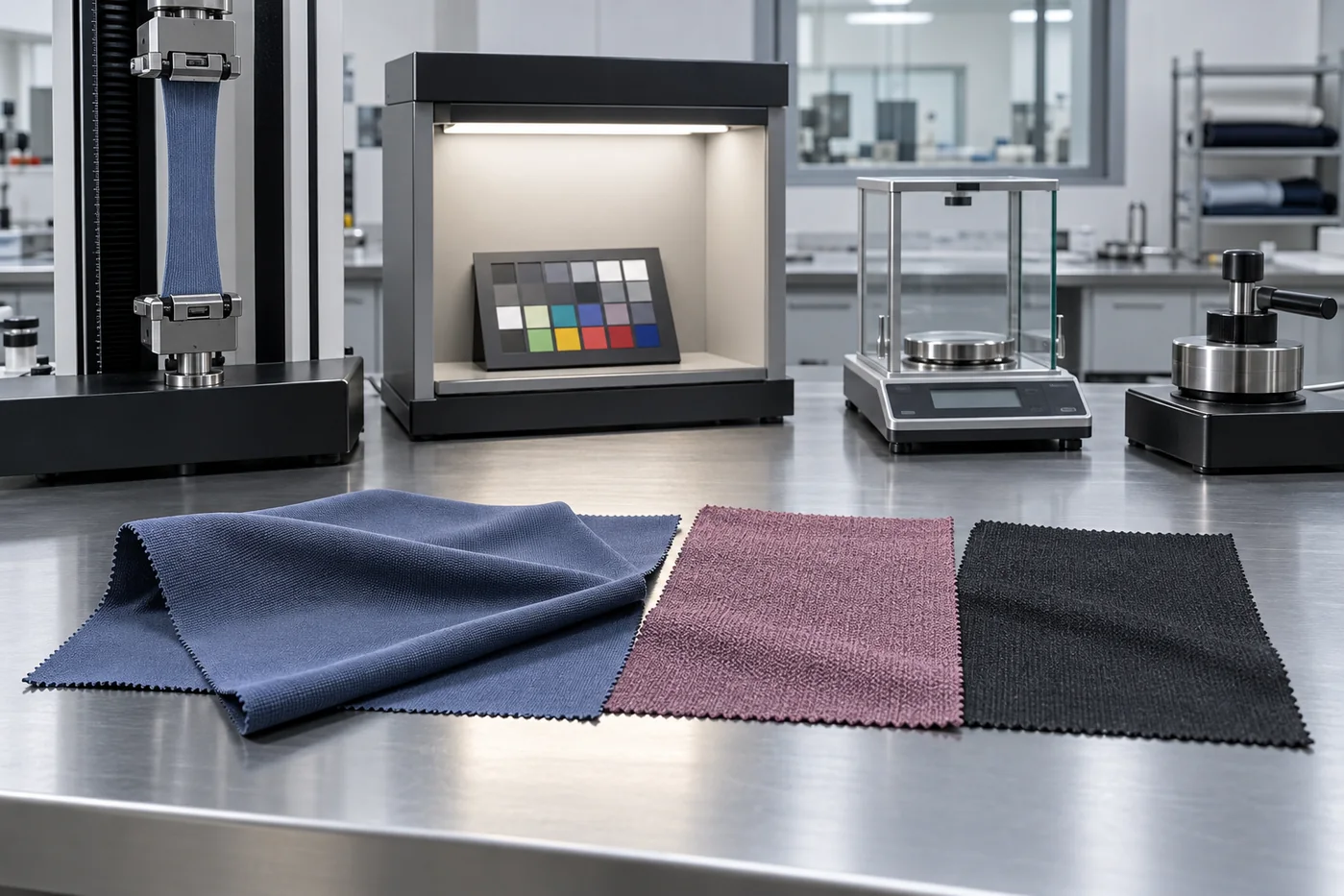
Test the Risks That Matter to the Garment
A legging may prioritize stretch recovery, opacity, pilling and dimensional stability. A white tennis dress may add wet opacity, color migration and lining compatibility. Swimwear may require chlorine, saltwater and colorfastness review.
Testing should be selected from the actual product risk, destination market and customer claim—not copied unchanged from another category.
Define Method, Condition and Acceptance
A result has limited value without the method, specimen condition, units and pass requirement. Record whether fabric was washed, wet, stretched or heat-aged before testing, and use consistent conditioning for comparisons.
Common controls include fiber content, GSM, width, stretch, growth, shrinkage, spirality, pilling, abrasion and colorfastness. Functional claims may require additional methods.
Connect Lab Approval to Bulk Control
Test development fabric before garment sampling, then lock the approved specification and physical swatch. For bulk, confirm representative lots before cutting and investigate meaningful deviations.
Reports do not replace garment fitting or workmanship inspection. Fabric data, sample approval, inline quality control and final inspection should operate as one system.
Suitable Activewear Applications
Pre-production approval for yoga wear, tennis apparel, men's gym wear, swimwear, cycling apparel and general activewear programs.
Related Manufacturing & Buyer Guides
Buyer FAQ
Does every fabric need every test?
No. The test plan should reflect end use, material risk, destination market and the claims made for the product.
When should testing happen?
Key development properties should be checked before sample approval, while representative bulk lots should be verified before cutting when the specification requires it.
Can a supplier certificate replace testing?
Supplier documentation is useful, but it may not represent the selected color, finish, production lot or final garment. Verification should be proportional to risk.
Send the Fabric Requirement
Include the garment category, target market, expected quantity, composition or hand-feel reference, required performance, color plan and applicable test method. CCLIYA can then review the development route, sampling scope and evidence needed before bulk approval.
Request Fabric Development